空即是色 Bouquet for The Past And Next Generation
薩摩切子 思無邪
Amuse
Bouquet for The Past And Next Generation
概要
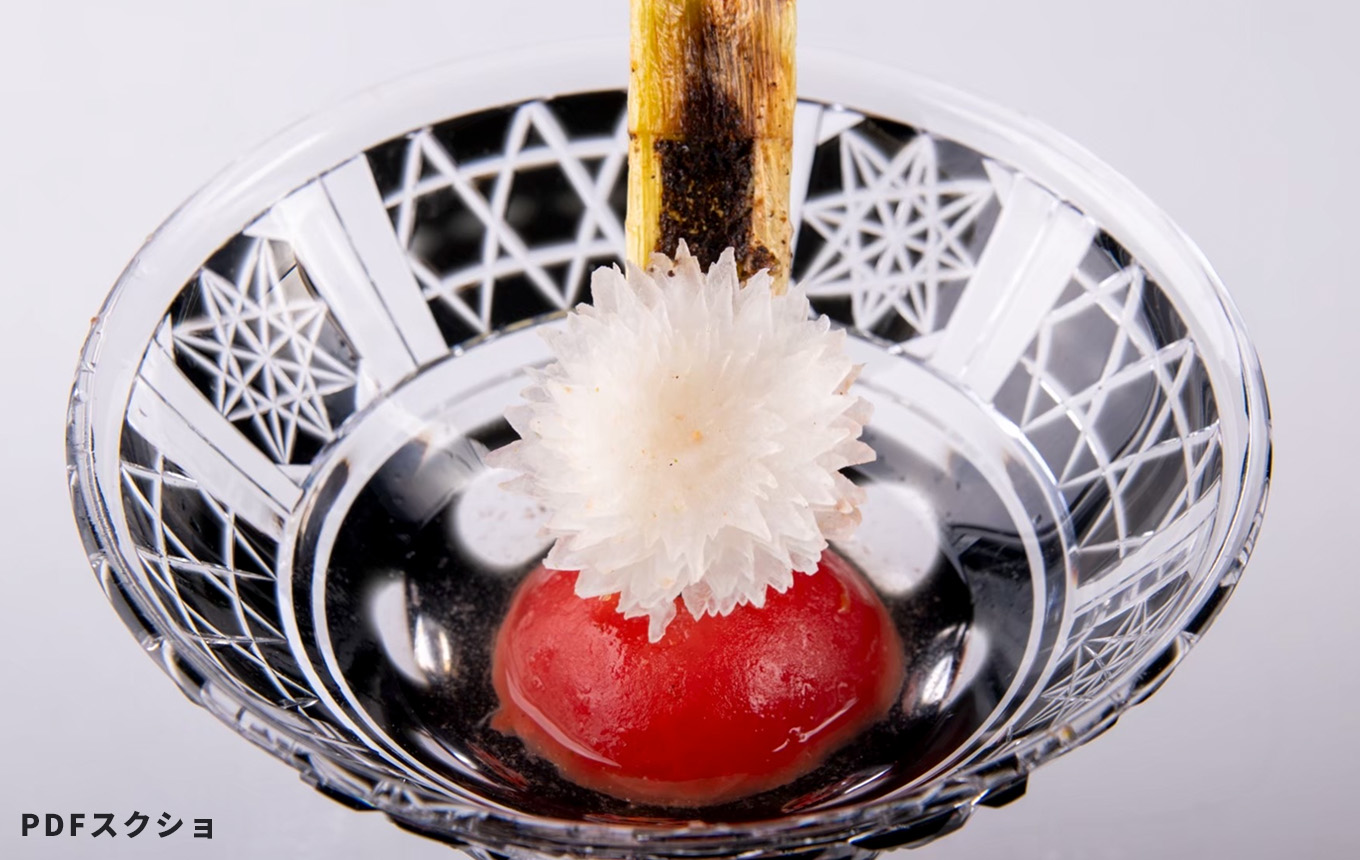
「日本茶は出汁になる」をコンセプトに、「攻めた野菜の一品」を作っています。二層になった伝統的な日本料理の枠組みである「博多流し」を土台にして、その上から茎、花、葉が生えるという構成 は、「伝統という土台から、花を咲かせる」というテーマと、料理はおぶき、言い換えれば仏前 にあげて先祖に今の自然を切り取ると同時に自分の成長、思いを伝える「献花」としてのテーマ。そしてそれを次世代に託す花です。コースの始まりの料理は、食欲を刺激しながらも優しい味わいになるように、モダンな薬膳精進料理にしています。
器
「空即是色」を表現するために、薩摩切子の「思無邪」を用いて暗い中から色が生まれ消えてまた黒に戻る連環を作り出しています。
料理
構成は、千利休の「泪」をモチーフにしています。
根と種子
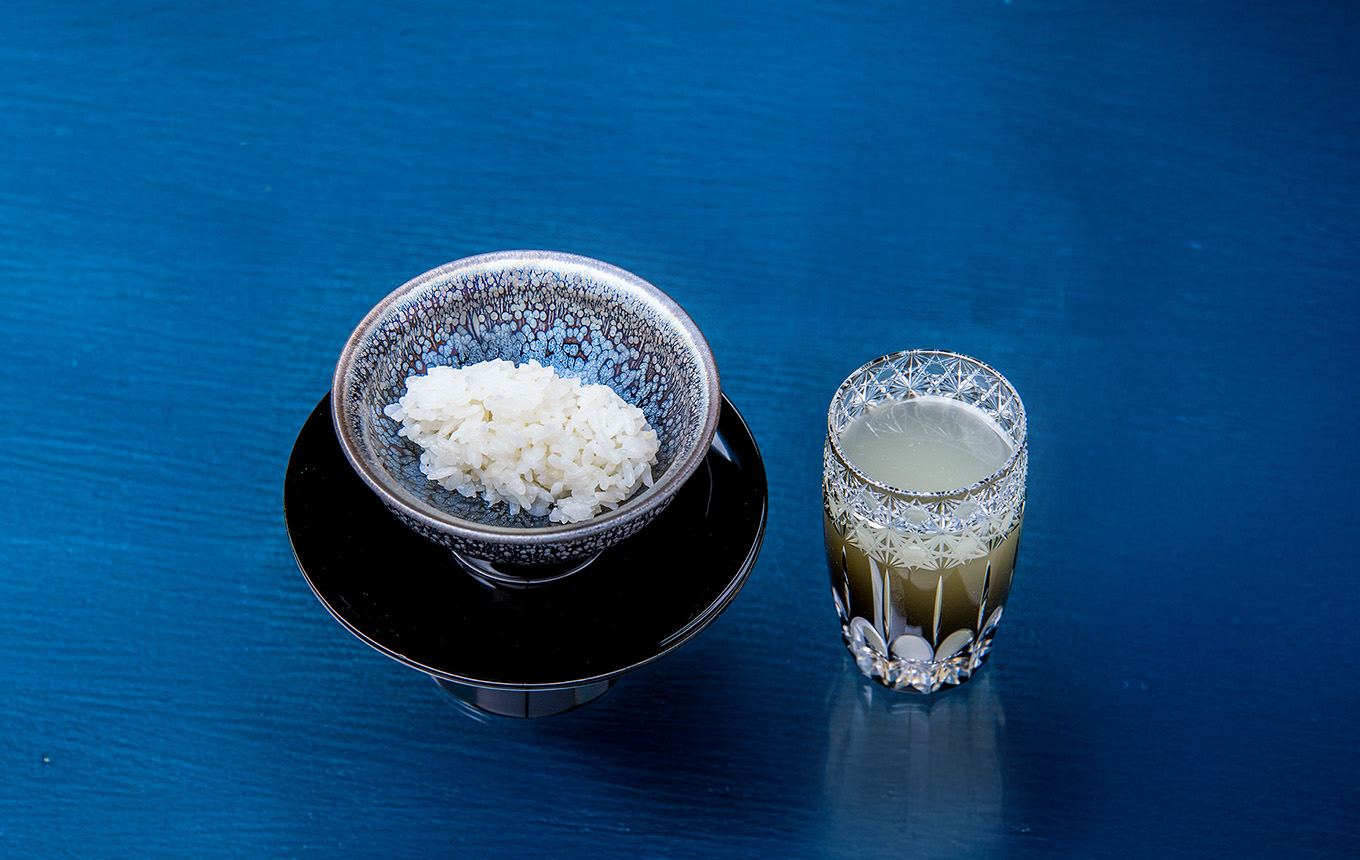
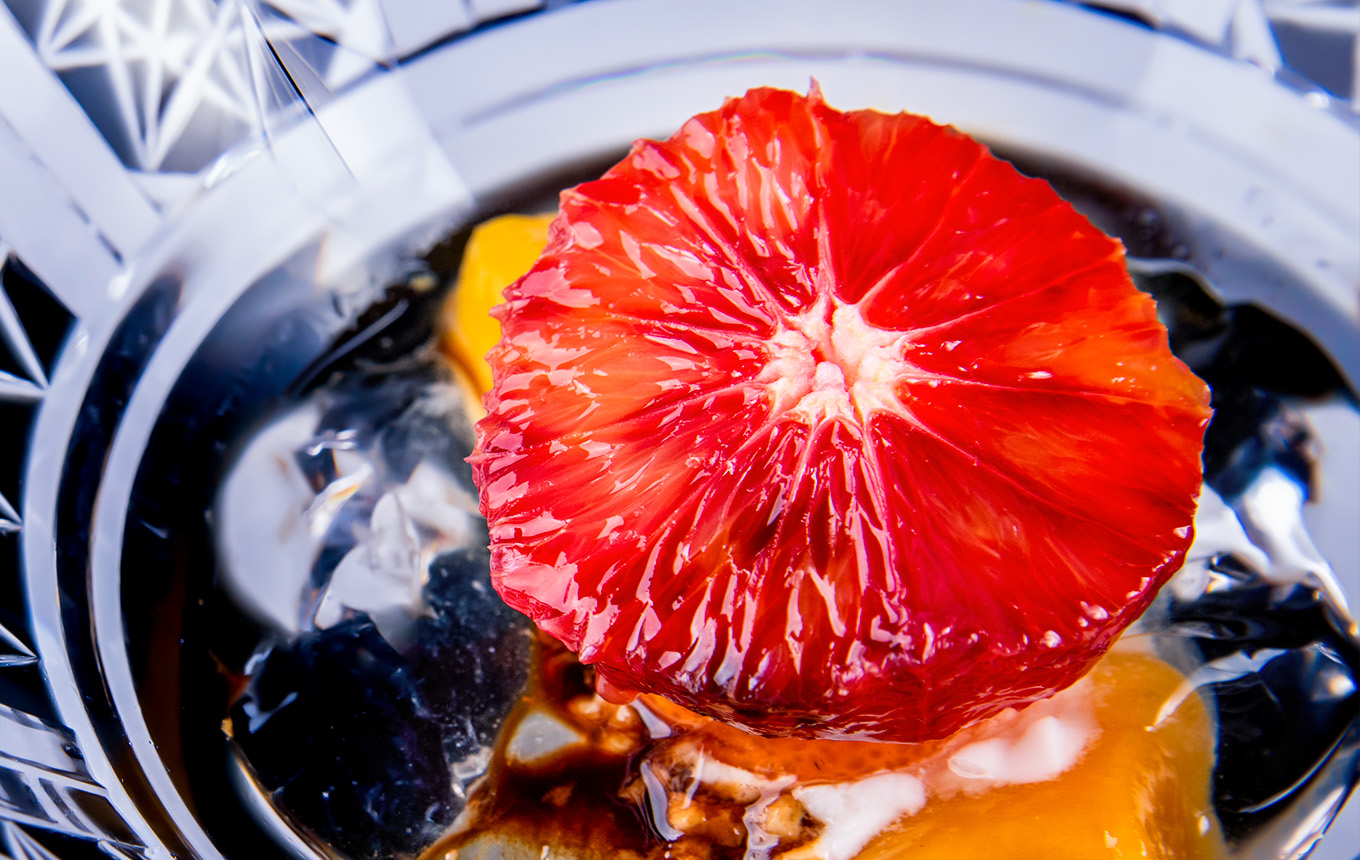
土台になるのは、根と種子を模した、トマトを数種類使った二層の「博多流し」という日本の伝統的な流しものです。湯むきして皮を剥いたフルーツトマトの種を抜いて中をくり 抜き、空いたスペースに上層にジュレ、下層に自家製豆腐を詰 めたもの。ジュレには、乾燥されたスーパーフルーツのストロベリー トマト/ゴールベンベリー、そしてトマトの種のエキスを抽出したクリア なダブルトマトコンソメに、トマトと風味でペアリングするクチナシの実とフェネグリークリーフという2つの薬膳スパイスを合わせています。下層は、自家製の豆腐飾り切りです。
茎
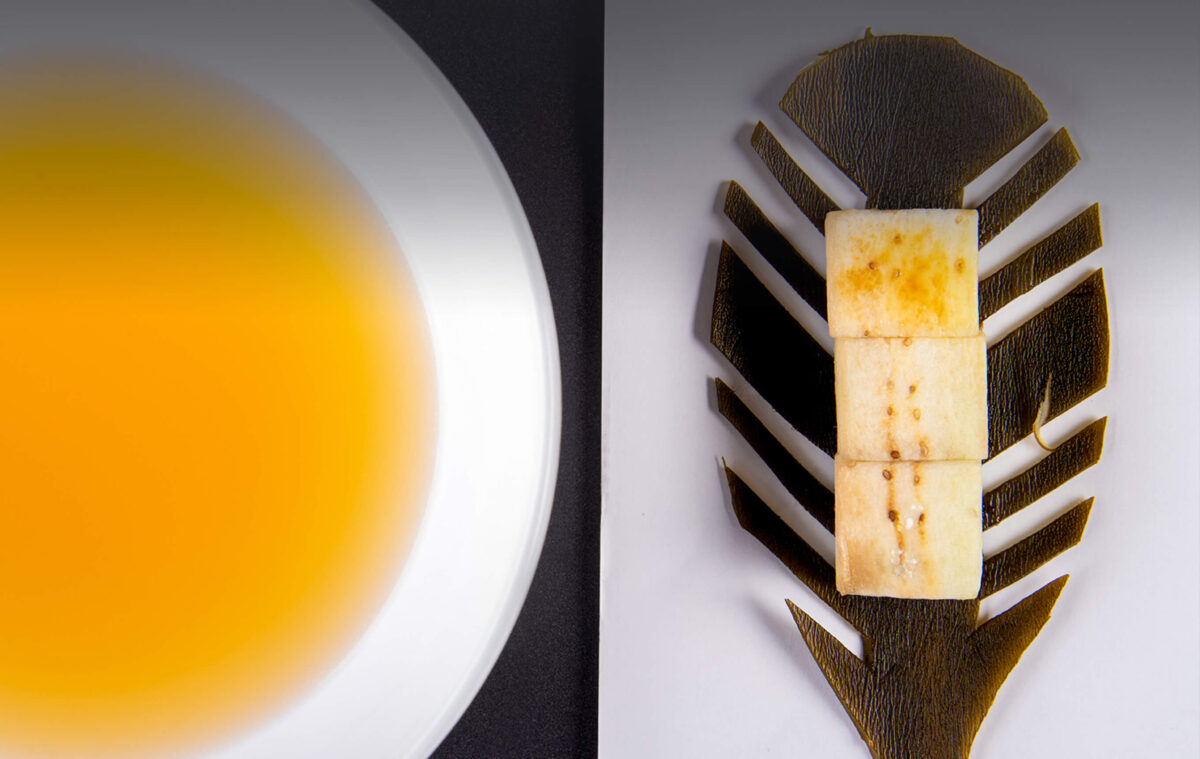
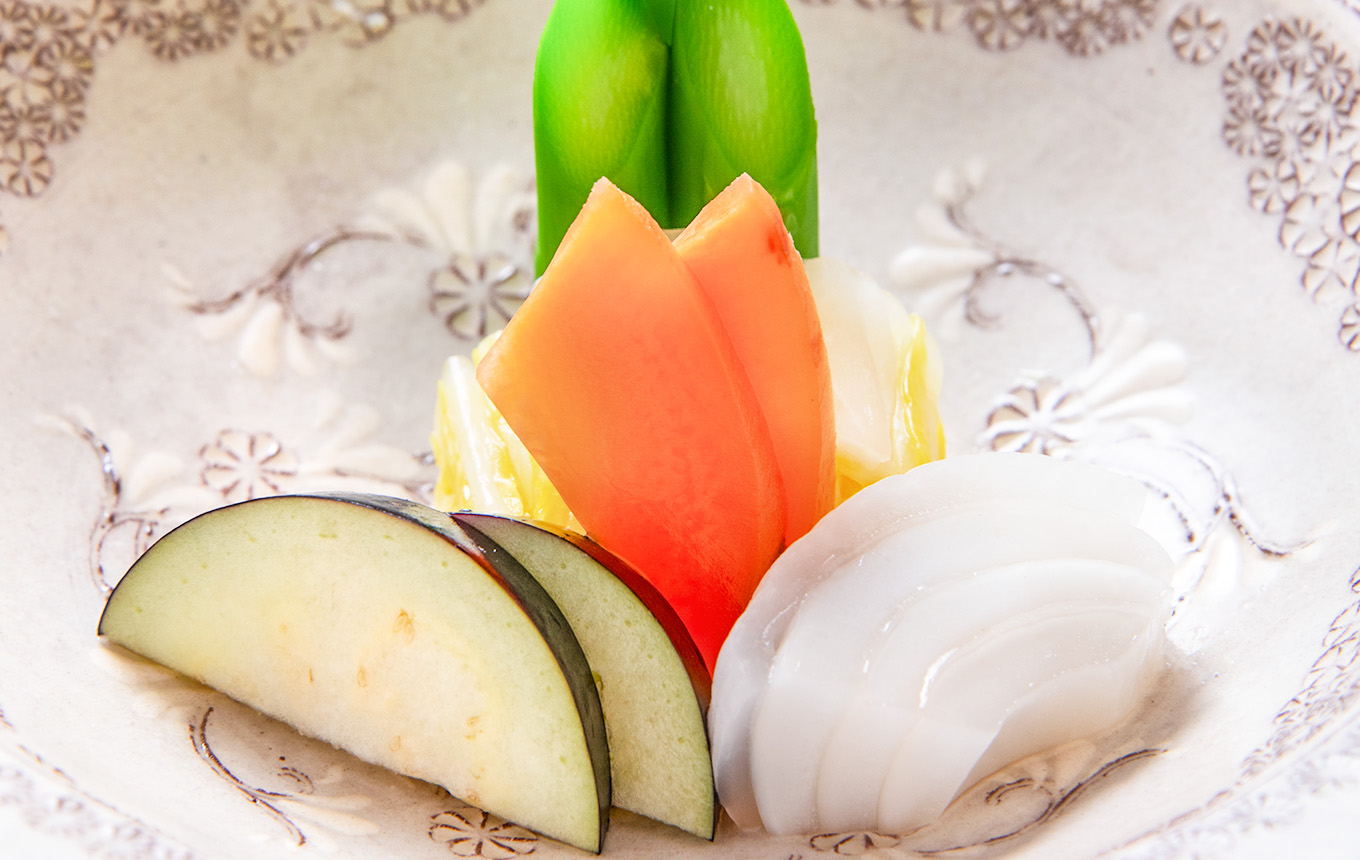
湖白ネギの「泪」に、ブートジョロキア入り黒十味唐辛子 。窓として開けた穴に、黒十味唐辛子を詰め、黒くする 。七味唐辛子は日本で薬膳の薬として調合、使用されていました。ネギをくり抜いた中には、自家栽培したタケノコを干し、戻し、炒ってから煮物 にしています。焼きネギを食べた時に、「美 味しいけどただのネギか」という感想じゃなく、「うまみが詰 まってる」という感想に持っていくためです。ブートジョロキア入りですが実際はごく少量だけで、辛さをあまり感じないレベルにしています。メニュー表記で身構える中甘さと酸味のバランスの取れた優しい味わいの身体と心温まる料理を出すことが目的です。
花
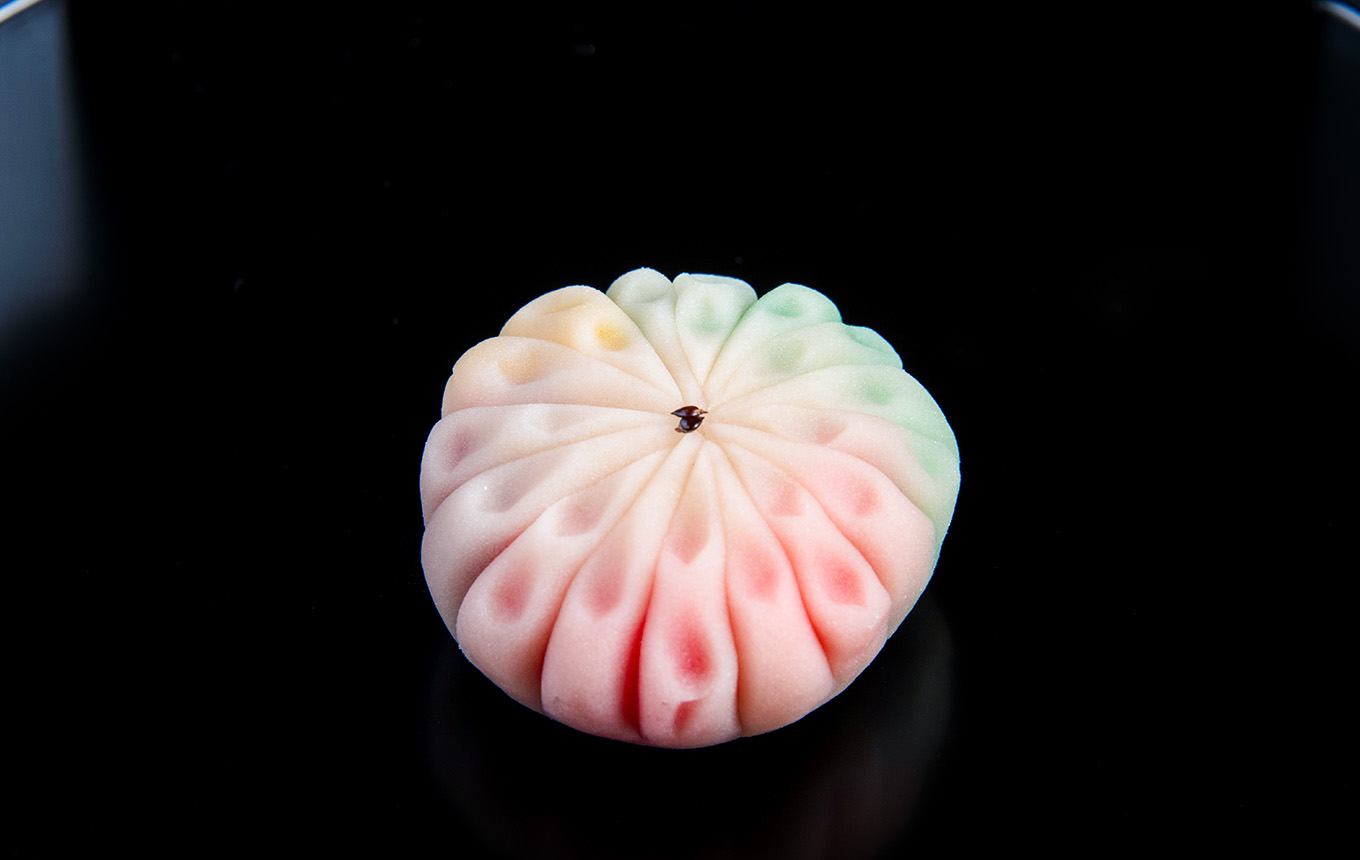
大根の菊花切りです。日本料理は割烹主従で切れ味を重視します。
ソース
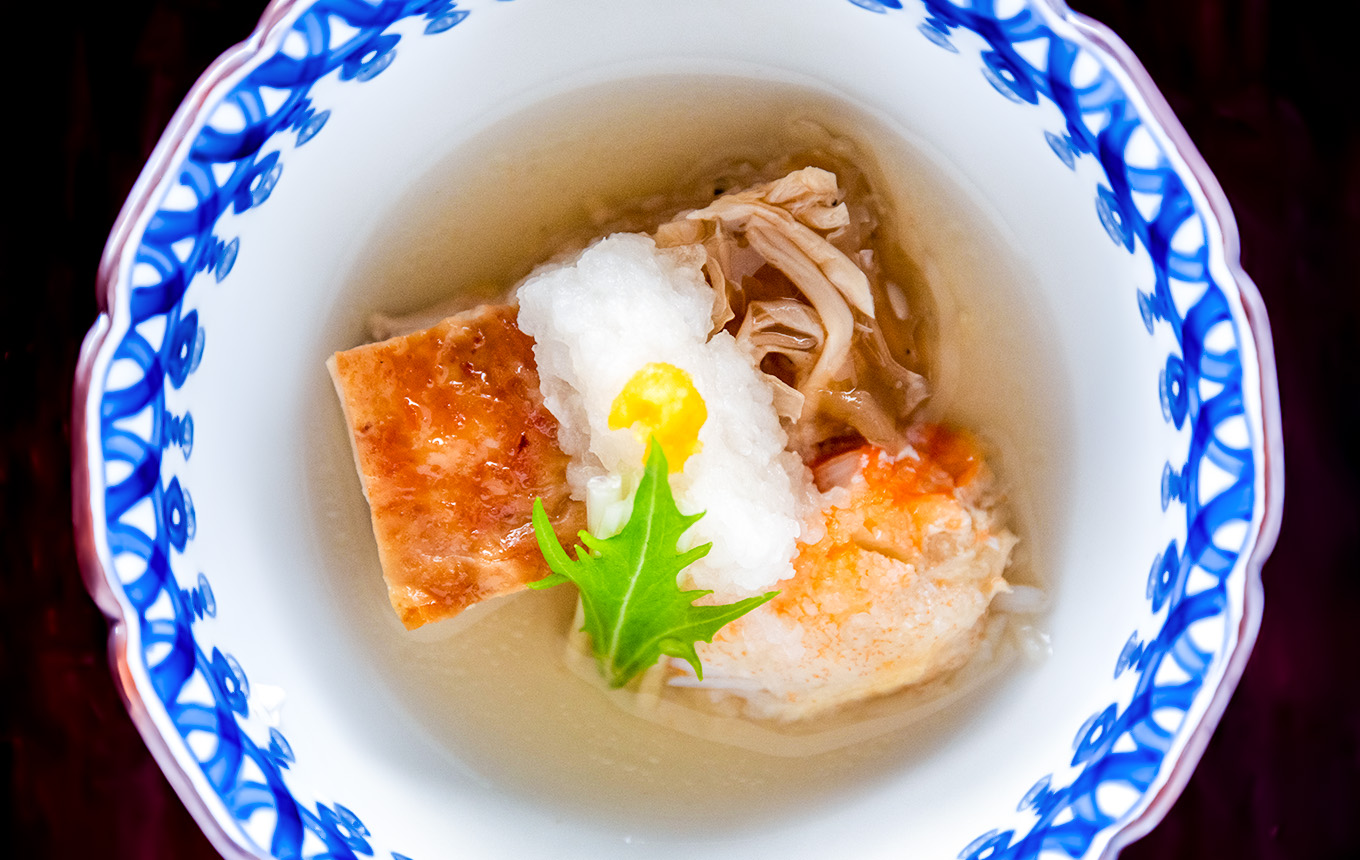
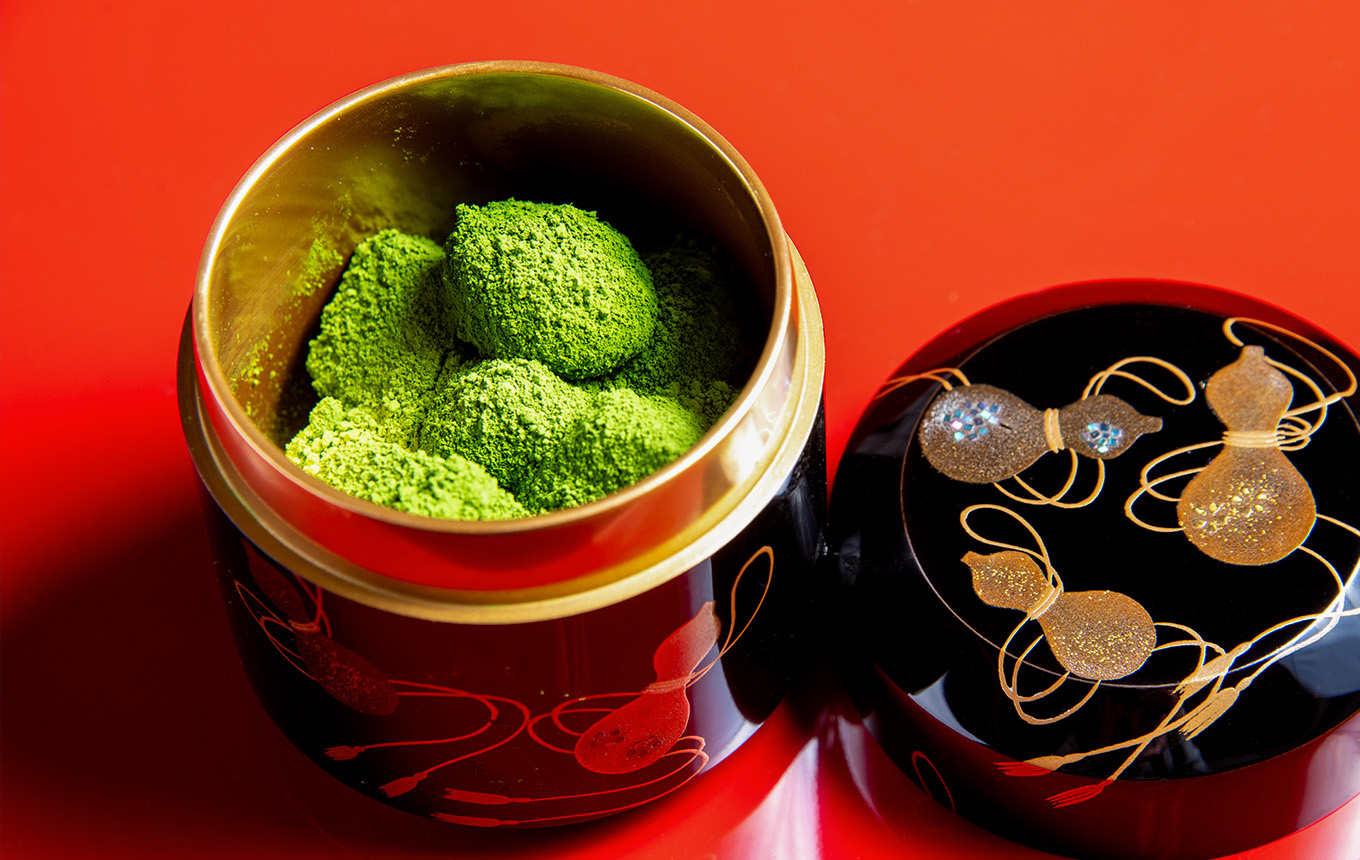
新井園の天の露のおひたしソース。 天の露は故新井重雄さんから新井真一郎さんに受け継がれた、丁寧に心を込めて育てられた黄金色の狭山茶です。旨味が強くあるため出汁になります。
議論
今回のコースでは自分の「水の料理」を打ち出すと共 に、コース料理の味の流れを徐々に盛り上がっていく形にしているため、1、2品目は構成説明に凝っているものの、一般の外国の人 が見た時、料理自体のインパクトとしては弱い。反面、水の料 理に関心がある人にとっては、特にこの一品目の狭山茶を出汁にする料理と、二品目の竹水を使った料理はとても深く響きます。とても攻めた水の料理になります。ただし、一品目の「博多流しの土台」、そして2品目の「山と海の幸ひとつずつ」を浸透させておくことで、イベントなど では、このコースイメージをベースに、お客さまの好みに合わせましたという形で一品一品が4番バッター級の美味しさの料理を出し驚きと感動を与えることができます。例えば一品目の土 台に豚の角煮を入れたり、二品目に山トリュフ海キャビアを使うなど。
Overview
Based on the concept that “Japanese tea can become dashi,” this dish is conceived as an “aggressive yet delicate vegetable course.”
It is built upon Hakata-nagashi, a traditional two-layered structure in Japanese cuisine, from which stems, flowers, and leaves emerge.
This composition represents the idea that flowers bloom from the foundation of tradition, while also framing the dish as obuki—an offering placed before the Buddha. In other words, it functions as a floral offering, capturing the present state of nature while conveying my own growth, thoughts, and intentions to my ancestors. At the same time, it is a flower entrusted to the next generation.
As the opening dish of the course, it is designed to gently stimulate the appetite while maintaining a calm, comforting profile. The cuisine is positioned as a modern interpretation of medicinal shōjin (Buddhist vegetarian) cuisine.
Vessel
To express the Buddhist concept of “Form is emptiness, emptiness is form,” I use the Satsuma Kiriko glassware “Shimuja (思無邪).”
From darkness, color emerges, fades, and returns to black—creating a cyclical visual narrative of appearance and disappearance.
Dish
The structure of the dish is inspired by Sen no Rikyū’s concept of “tears.”
Roots and Seeds
The foundation consists of a two-layered Hakata-nagashi, representing roots and seeds, made using several varieties of tomato.
A blanched fruit tomato is peeled, deseeded, and hollowed out. The cavity is filled with:
- Upper layer: a jelly
- Lower layer: house-made tofu
The jelly is composed of a clear double tomato consommé extracted from tomato seeds, combined with dried superfruits—strawberry tomatoes and golden berries. To complement tomato aromatics, two medicinal spices are added: gardenia fruit and fenugreek leaves.
The lower layer features delicately cut house-made tofu.
Stem
A grilled Kohaku negi (long leek) interpreted as “tears,” paired with black shichimi chili infused with Bhut Jolokia.
Small window-like openings are carved into the leek and filled with the blackened spice.
Historically, shichimi chili was blended and used in Japan as a medicinal spice. Inside the hollowed leek is homegrown bamboo shoot, dried, rehydrated, dry-roasted, and then simmered.
The intention is to move the diner beyond the reaction of “It’s good, but it’s just leek,” toward “This is packed with umami.”
Although Bhut Jolokia is used, the quantity is extremely small, keeping the heat below perceptible levels. While the menu description may create anticipation or tension, the actual flavor is gentle, balanced with sweetness and acidity—designed to warm both body and mind.
Flower
A daikon radish cut in the traditional chrysanthemum style.
Japanese cuisine values knife work within a hierarchical system of preparation, emphasizing precision and sharpness.
Sauce
“Ten no Tsuyu” ohitashi-style sauce from Arai-en
Ten no Tsuyu is a golden Sayama tea cultivated with care and devotion, passed down from the late Shigeo Arai to Shinichiro Arai.
Because of its deep umami, this tea functions as a true dashi.
Discussion
In this course, I present my identity through “water-based cuisine,” while gradually building intensity across the progression of dishes. As a result, the first and second courses emphasize conceptual structure, which may appear visually understated to general international audiences.
However, for diners interested in the philosophy of water in cuisine, the first dish—using Sayama tea as dashi—and the second dish—centered on bamboo water—resonate deeply. Together, they form a highly experimental and forward-thinking expression of water-focused cooking.
By establishing the foundational elements—the Hakata-nagashi base in the first course and the “one mountain ingredient, one sea ingredient” principle in the second—this framework allows flexibility in event settings. Using the same conceptual backbone, dishes can be adapted to guest preferences, transforming each course into a “cleanup hitter”–level impact dish.
For example, the base of the first course could incorporate braised pork belly, or the second course could feature mountain truffles paired with sea-sourced caviar—creating surprise and emotional impact while remaining rooted in the original philosophy.