陰陽 Yin Yang - Sun and Moon
吉田博次作 竹の器
Hassun
Yin Yang – Sun and Moon
概要
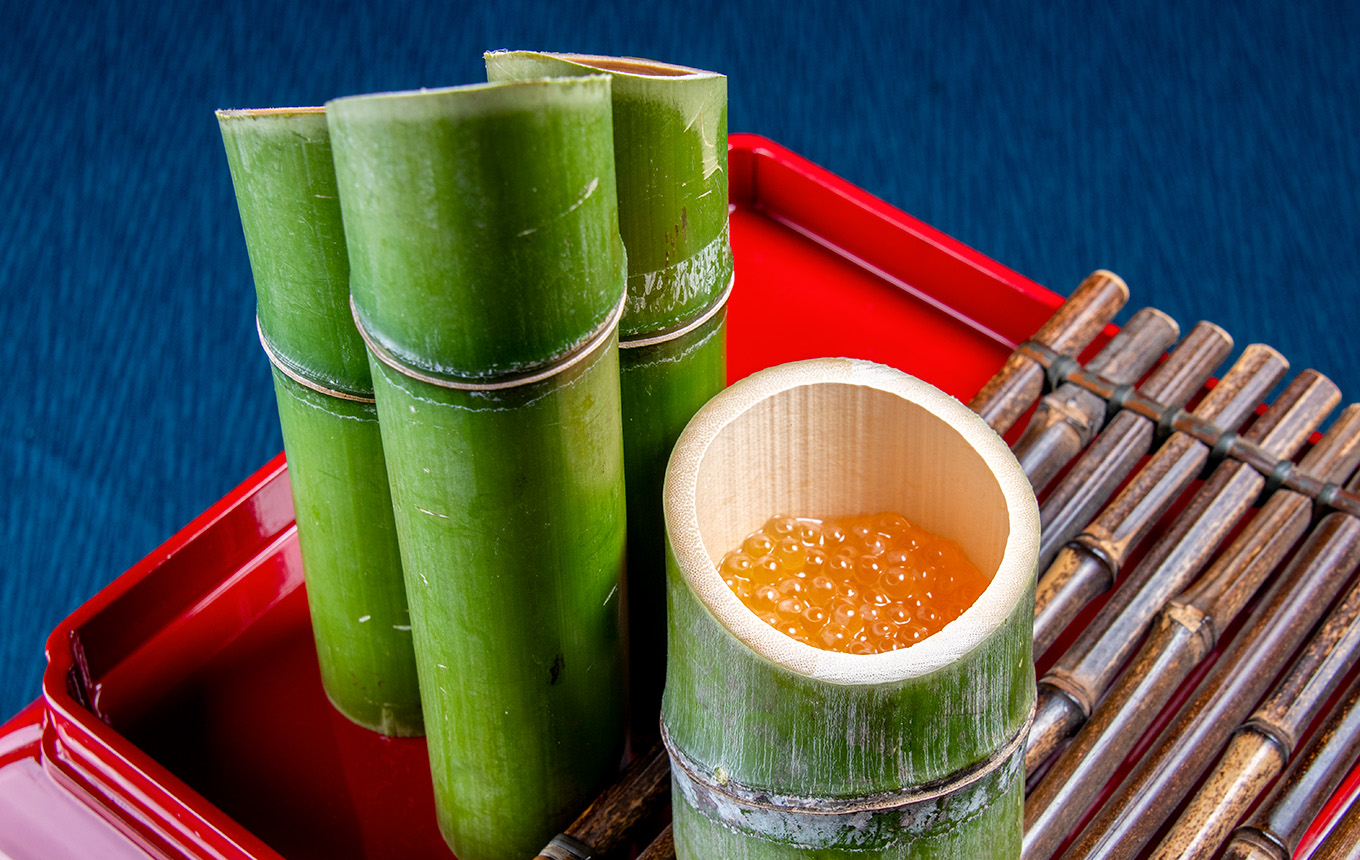
八寸とは、伝統的な山の幸と海の幸を盛りつけた一期一会の出会いを祝う一品です。山の幸には、禅寺の精進胡麻豆腐に、温かい「竹水」、そしてわさび。海の幸には、黄金に輝く月見いくらに一番出汁。「水の料理」の八寸です。
器
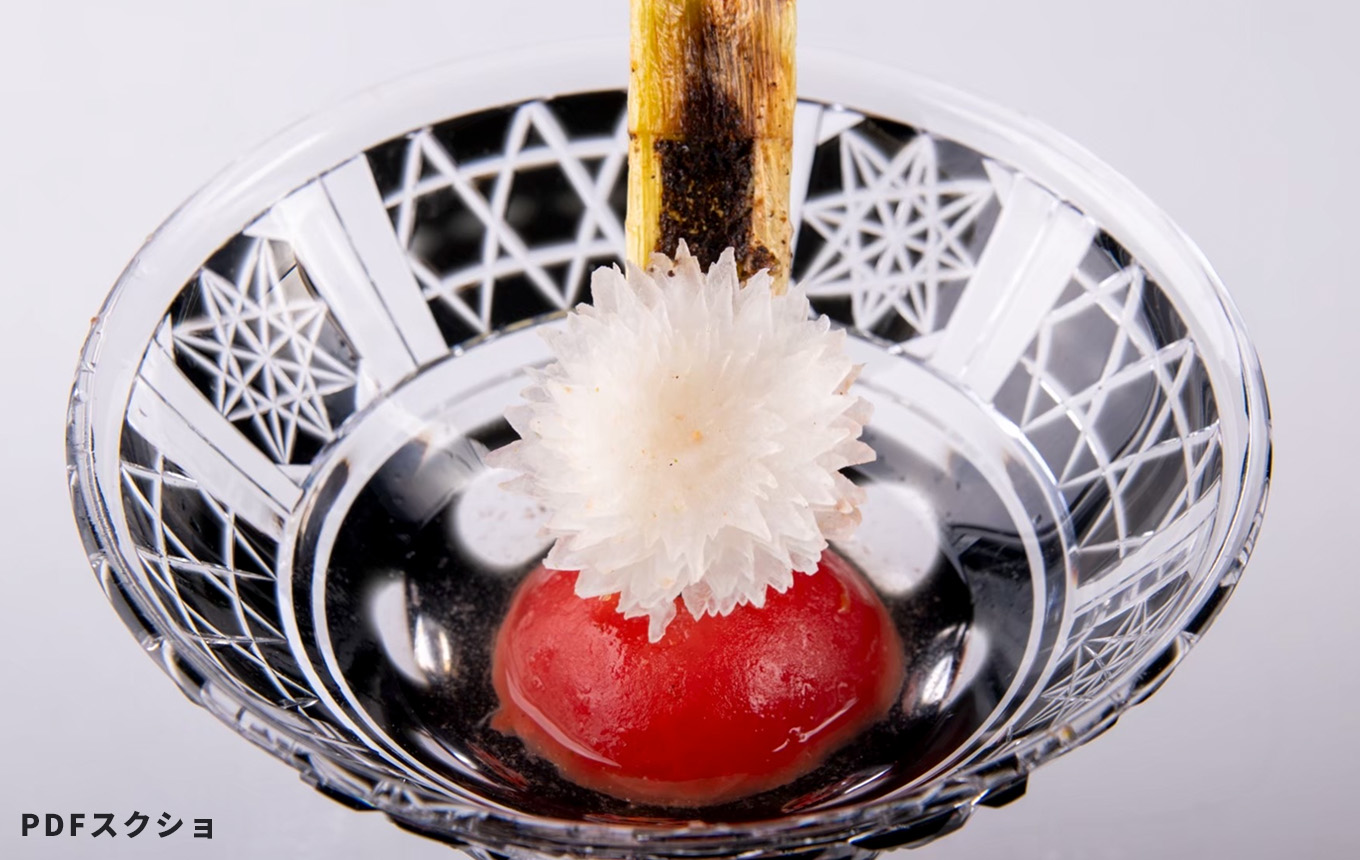
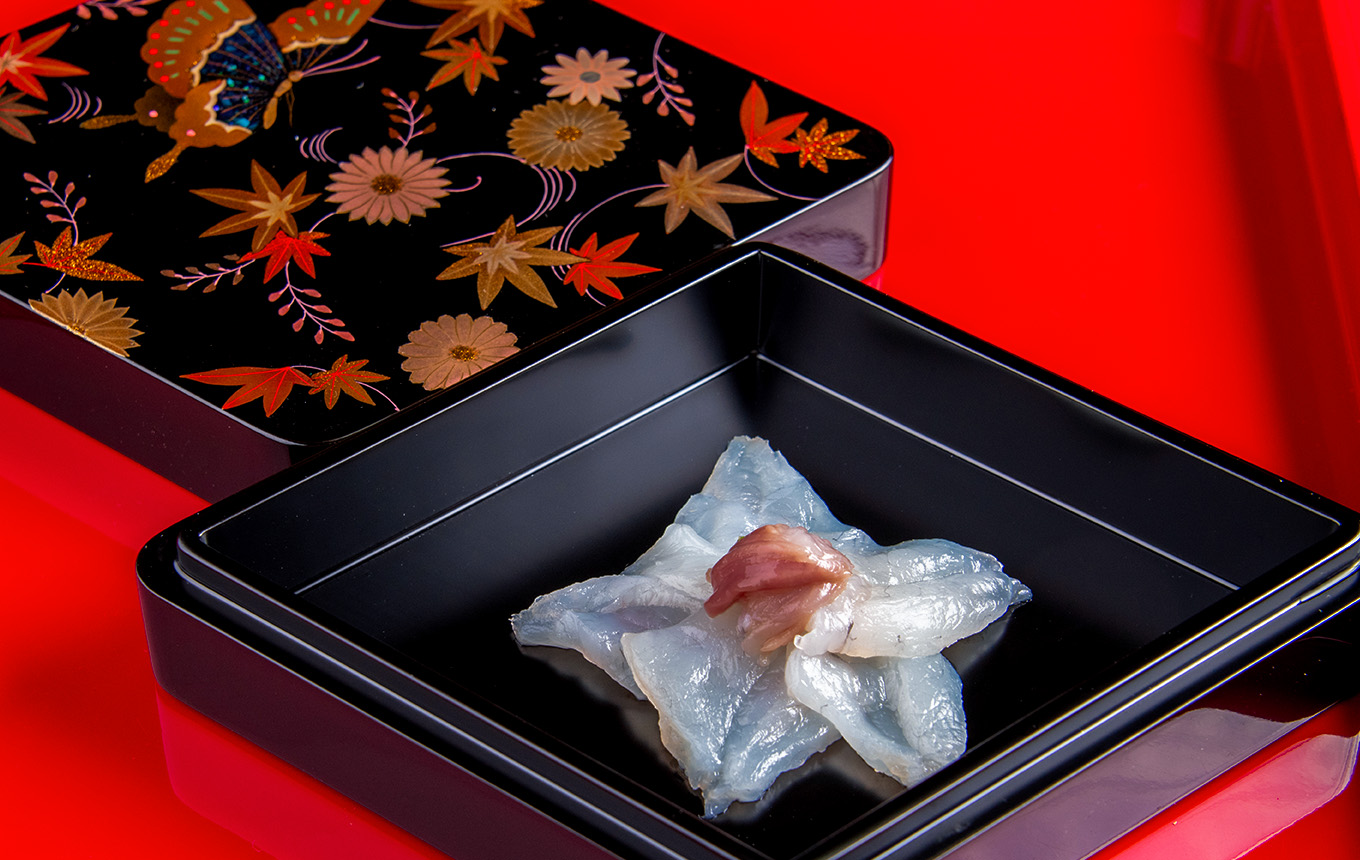
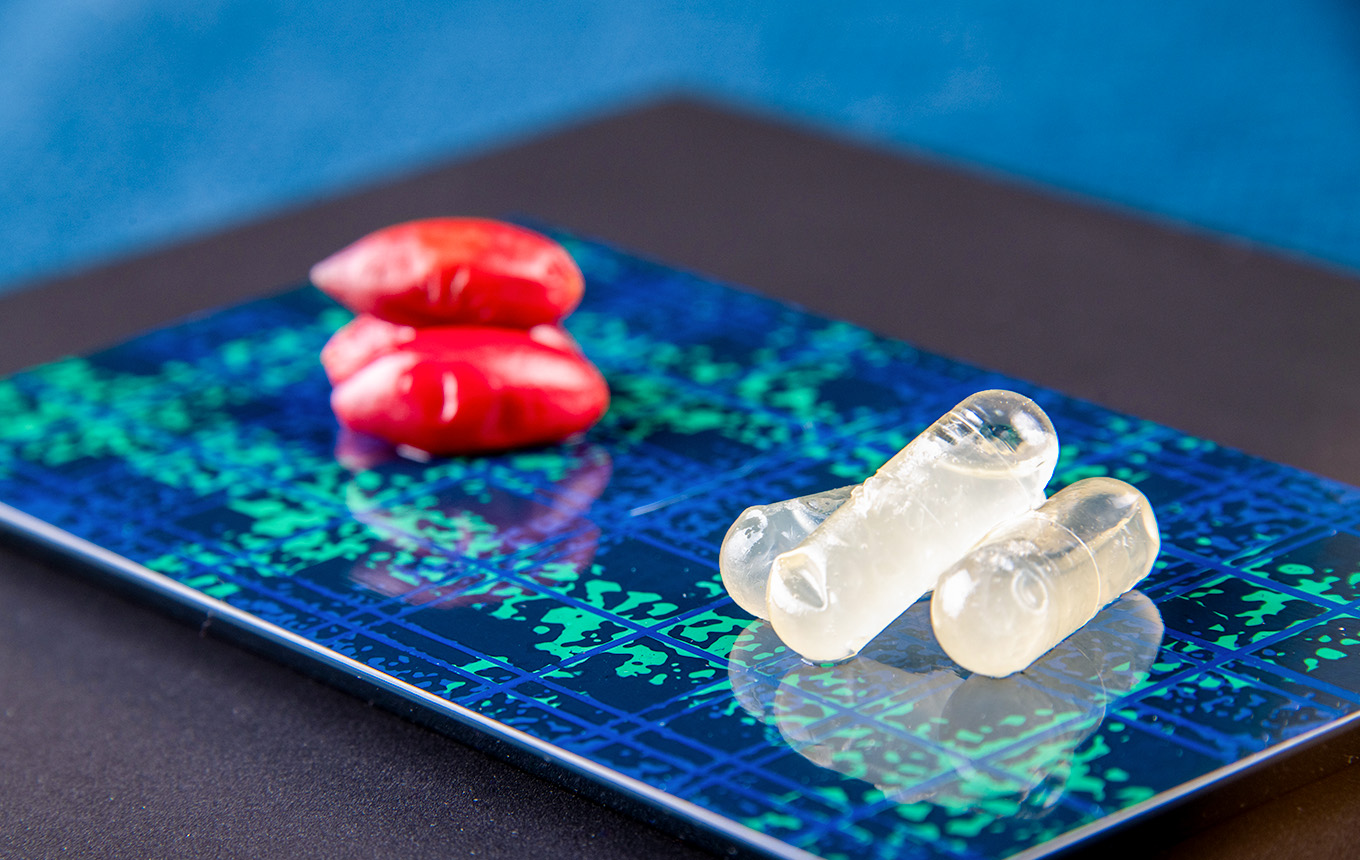
赤漆は仏様に使うのが伝統です。先祖に捧げる八寸という意味合いを込めて赤漆を使用しています。京都発・竹・流域環境ネットの吉田博次さんという竹のプロ フェッショナルからお仕事の話を聞く中で、竹資源を料理で 使用することで、自然環境保全に関わらせていただいています。竹の器は吉田さんにその場で作っていただいたものと、イカダを模した燻竹は吉田さんが制作しているものです。
料理
コンセプトは、八寸という日本独自の料理提供の仕方を知っていただくことと、日本料理の根底にある、陰陽という概念の説明の導入です。
山の幸
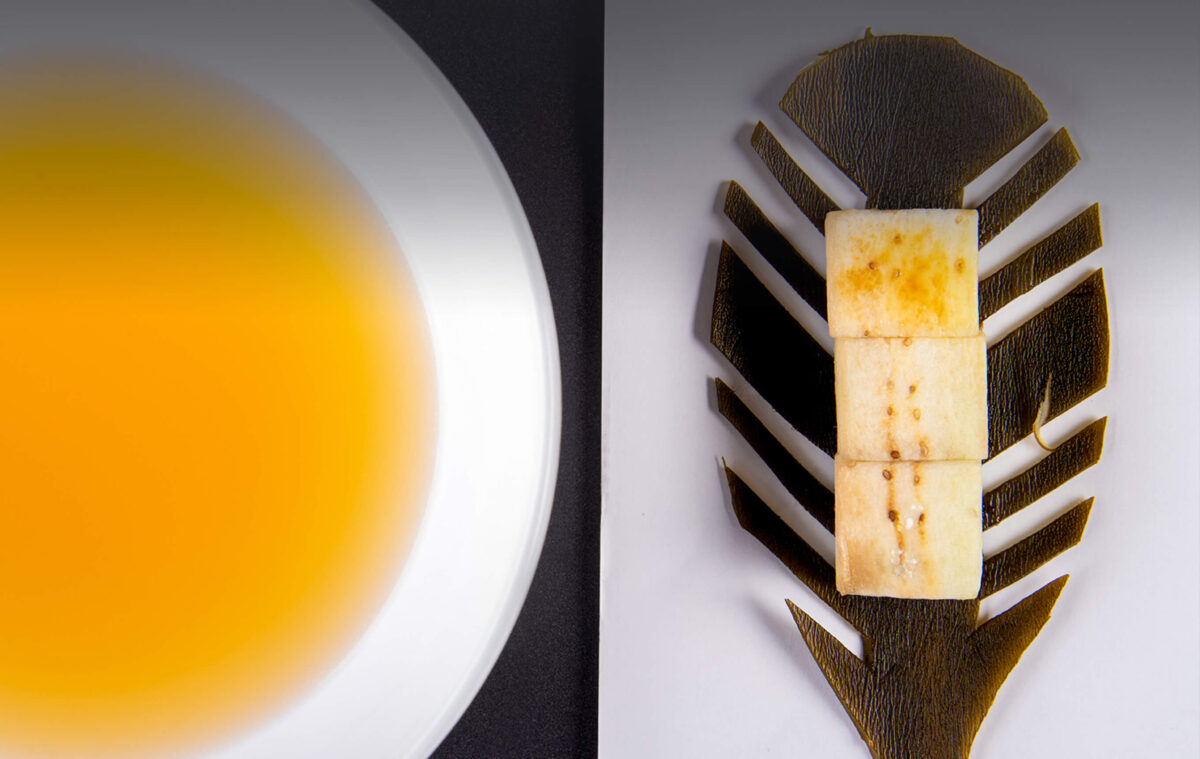
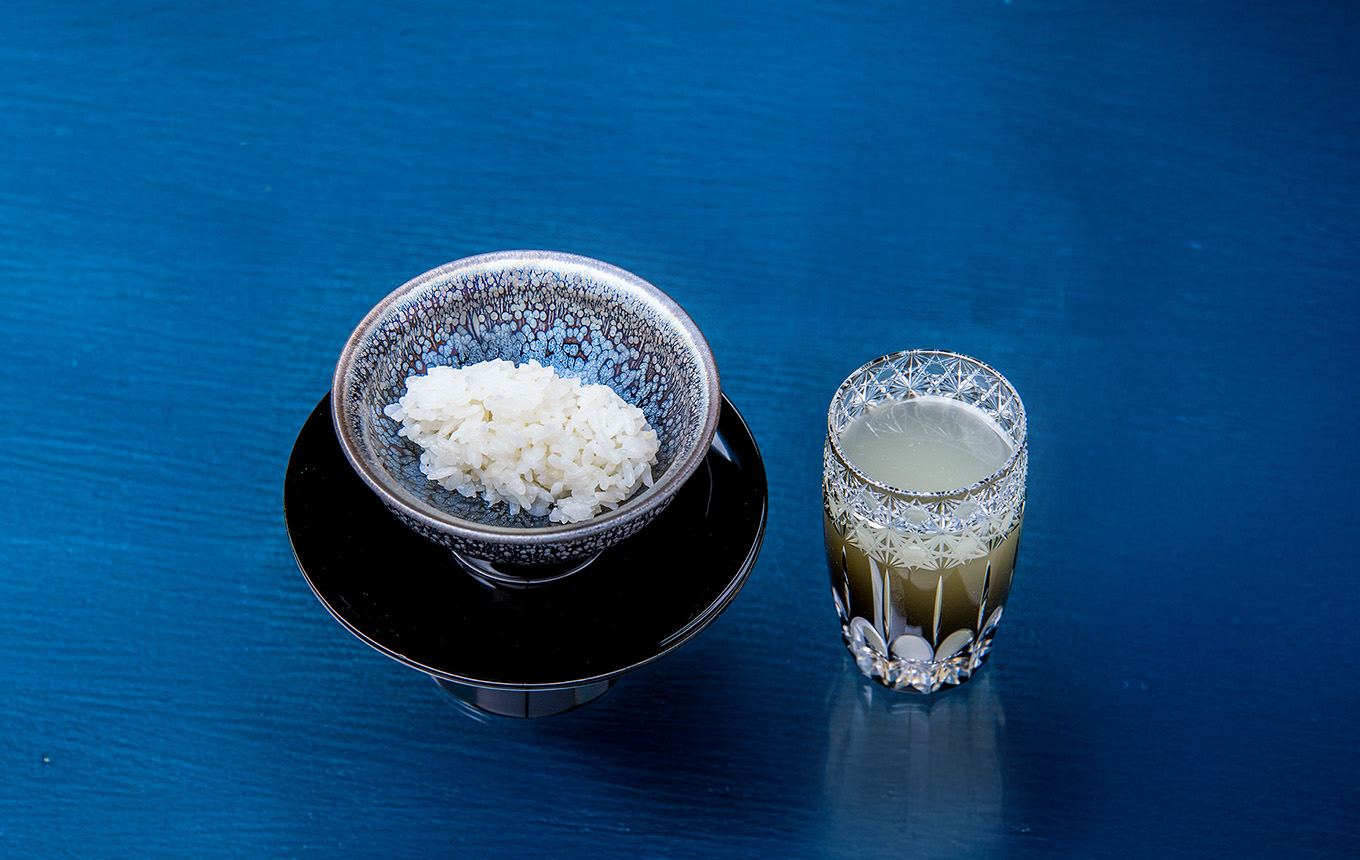
胡麻をすることから始めた自家製胡麻豆腐、竹水、わさび
禅寺に生まれたという自分のユニークな特徴を伝えるとともに、手間をかけて練り上げた胡麻豆腐でストーリー性を持たせています。例えば派生して、外カリカリ中クリーミーな焼き胡麻豆腐にもできます。海の幸は黄金のいくらですが、例えば派生し て特製発酵明太子などにもできます。竹水とは、太陽エネルギー の詰まった、一年のごくわずかな期間しかとれない、竹の内部に溜まる水です。それだけでは甘いけれど無味無臭なので、もうそうだけの香りをうつした出汁を作っています。
海の幸
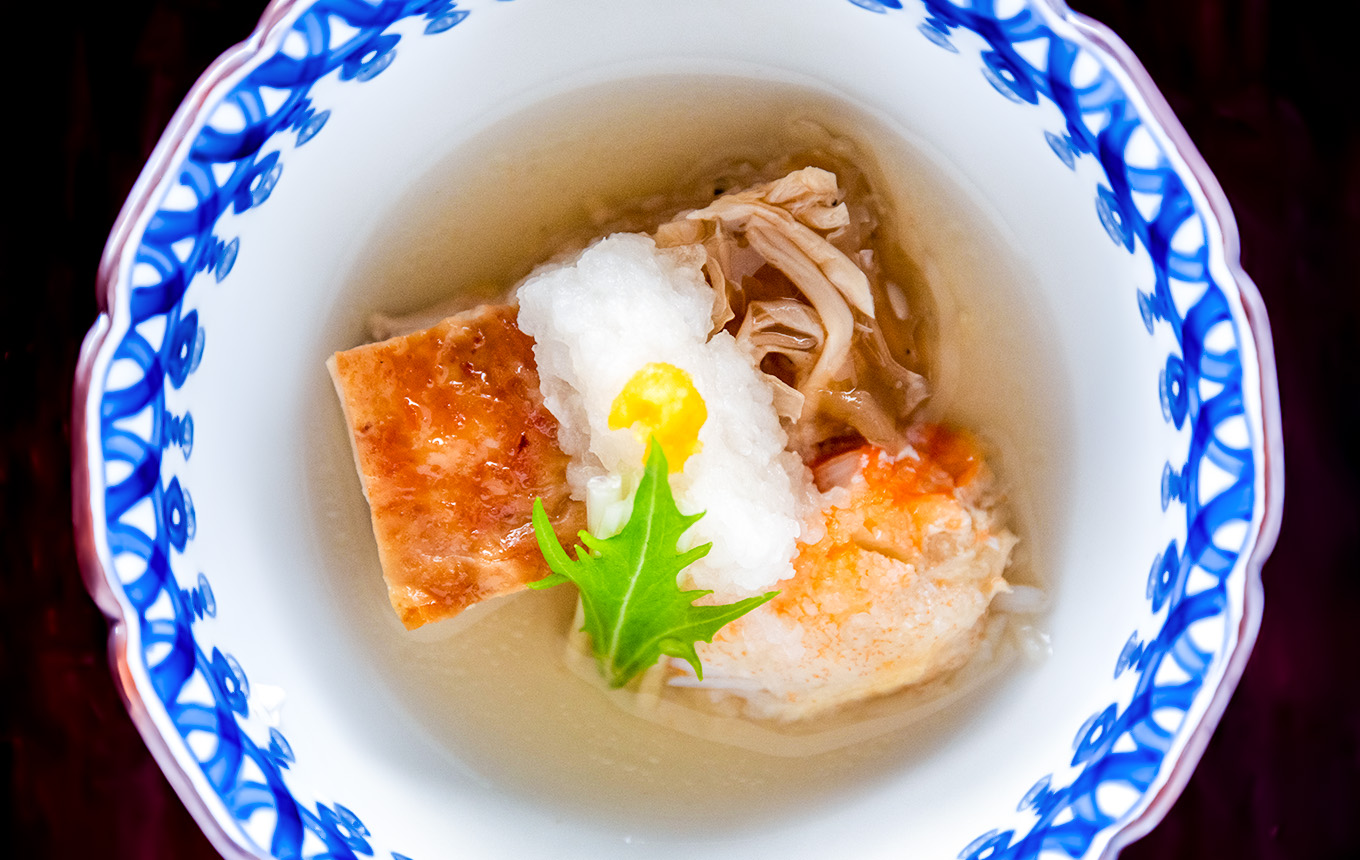
黄金の月見いくら、一番出汁
この料理で一番伝えたいのが、出汁に対する外国人受けするこだわりです。 「蔵囲い」熟成させて、臭みをとった 昆布と、モーツァルトを聞かせながら熟成させた鰹節を使った 一番出汁。それらを特別な温泉水でとった出汁。この こだわりがあります。
議論
対応関係に関して、この一品には山と海、太陽と月、四角と丸という食材の形があります。陰陽図には、陽の中にも陰があり、陰の中にも陽があります。八寸本の外接円を陰陽図とした際、陽の中の陰の部分に山の幸があり、陰の中の陽の部分に海の幸があります。別のコラムで詳しく説明しますが、日本料理は片刃の包丁を使い、それによって陰陽が生まれ、盛り付けにも陰陽があります。この様式が自分 の2品目かつ日本伝統の出し方としてパッケージ化できた上では、 海外イベントでは大胆にここでトリュフとキャビアを山 と海の一品ずつの上に使い、それが日本料理として成立する構図が出来上がります。そして特別皿2: プレステージで明かす、「水の料理」という日本料理の特徴を感じてもらうために、太陽エネルギーがこもった日本の山のハーブのカクテルを温めたものと、綺麗な水が湧く場所で育つわさびを山の幸に置き、温泉水で 取った一番出汁を海の幸に入れています。水の料理が裏テーマです。
竹水と太陽エネルギーに関して説明します。竹は太陽の光を浴びて成長する。竹水はそのエネルギーを受け て生まれていて、太陽エネルギーによって、自然に生じた甘みが詰 まっています。自分の料理は白砂糖を添加しない料理ですが、そう聞いて甘くない健康志向のつまらない料理を想像したお客様に、2品目で一気に甘い出汁を出して心を掴んでいます。甘さは誰にでも共通で通じる武器だからです。また、なぜ温泉水を出汁を引く際に使うのかについては、食材についてのコラムを参照してください。
Overview
Hassun is a traditional Japanese course that celebrates a once-in-a-lifetime encounter (ichigo ichie) through the pairing of mountain ingredients and sea ingredients.
In this interpretation, the mountain element consists of Zen-style sesame tofu, warm bamboo water, and wasabi.
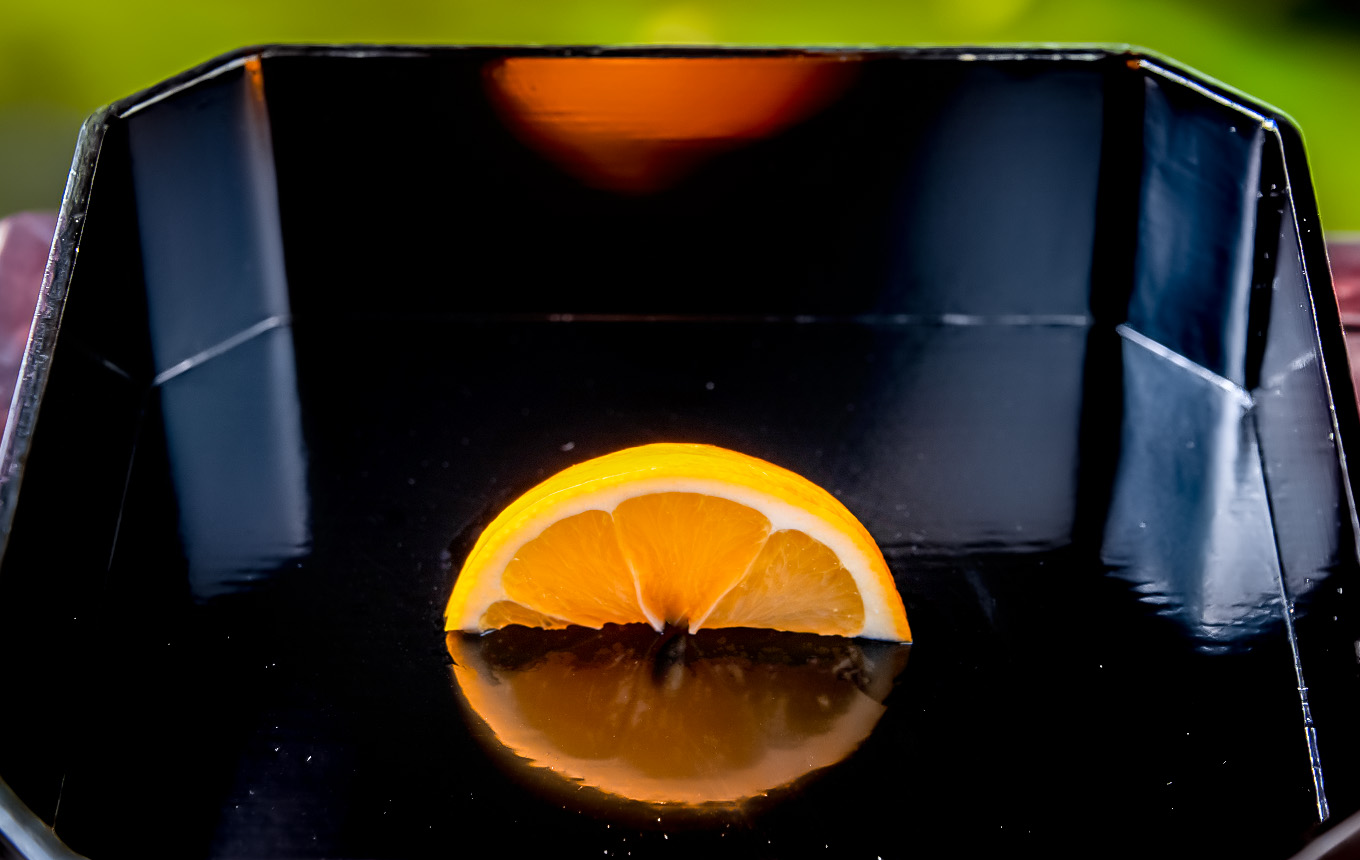
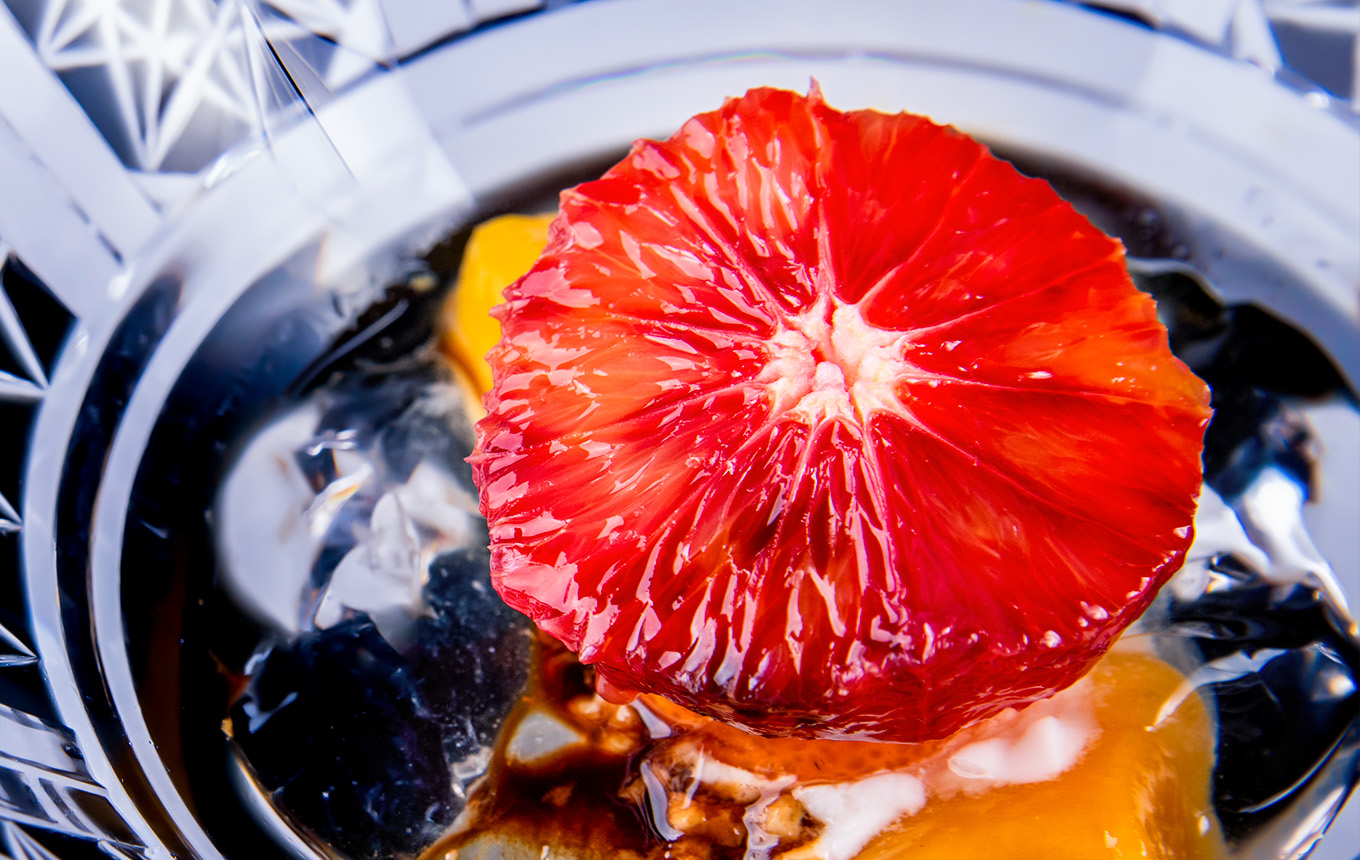
The sea element features golden moon-viewing ikura paired with ichiban dashi.
This is a Hassun expressed through the lens of “water-based cuisine.”
Vessel
Red lacquer has traditionally been used in offerings to the Buddha.
To emphasize the meaning of Hassun as a dish offered to one’s ancestors, red lacquerware is used.
Through my conversations with Hirotsugu Yoshida, a bamboo specialist from Kyoto Bamboo & Watershed Environment Network, I became involved in environmental conservation by incorporating bamboo resources into my cuisine.
The bamboo vessels were crafted on site by Yoshida-san himself, and the smoked bamboo piece—shaped like a raft—was also created by him.
Dish
The purpose of this dish is twofold:
- To serve as an entry point into the fundamental Japanese culinary philosophy of Yin and Yang
- To introduce Hassun, a uniquely Japanese style of course presentation
Mountain Ingredients
House-made sesame tofu (starting from grinding sesame seeds), bamboo water, wasabi
This dish communicates my unique background of being born into a Zen temple, while the carefully kneaded sesame tofu adds narrative depth through craftsmanship.
The sesame tofu can also evolve into variations such as grilled sesame tofu—crispy on the outside, creamy on the inside.
Likewise, while the sea element is golden ikura here, it could evolve into alternatives such as house-fermented mentaiko.
Bamboo water is a naturally occurring liquid that accumulates inside bamboo only during a very limited period of the year. It contains condensed solar energy absorbed during bamboo growth.
On its own, bamboo water is sweet but nearly flavorless and odorless. Therefore, I create a dashi infused with the aroma of mōsō bamboo grass.
Sea Ingredients
Golden “Tsukimi” ikura, ichiban dashi
The most important message of this dish is my approach to dashi in a way that resonates with international audiences.
The ichiban dashi is made using:
- Kombu aged through the traditional kuragakoi method, which removes unwanted aromas
- Katsuobushi aged while listening to Mozart, encouraging controlled fermentation
- A special onsen (hot spring) water as the extraction medium
This devotion to dashi is central to the dish.
Discussion
In terms of symbolic correspondence, this dish contains multiple dualities:
- Mountain and sea
- Sun and moon
- Square and circle (in ingredient shapes)
In the Yin–Yang diagram, there is Yin within Yang and Yang within Yin.
When the circumscribed circle of the Hassun tray is overlaid with the Yin–Yang symbol, the mountain ingredients are positioned within the Yin contained in Yang, while the sea ingredients sit within the Yang contained in Yin.
As discussed in more detail in a separate column, Japanese cuisine traditionally uses single-bevel knives, which inherently create Yin and Yang. This duality extends into plating as well.
Once this format is established as my second course and packaged as a traditional Japanese presentation style, it allows for bold adaptations in international events—such as placing truffles on the mountain dish and caviar on the sea dish—while still remaining fundamentally Japanese in structure.