輪廻転生 Pre-Destination and Free Will
箱瀬淳一 春秋蒔絵
“Tsukuri”
Pre-Destination and Free Will
概要
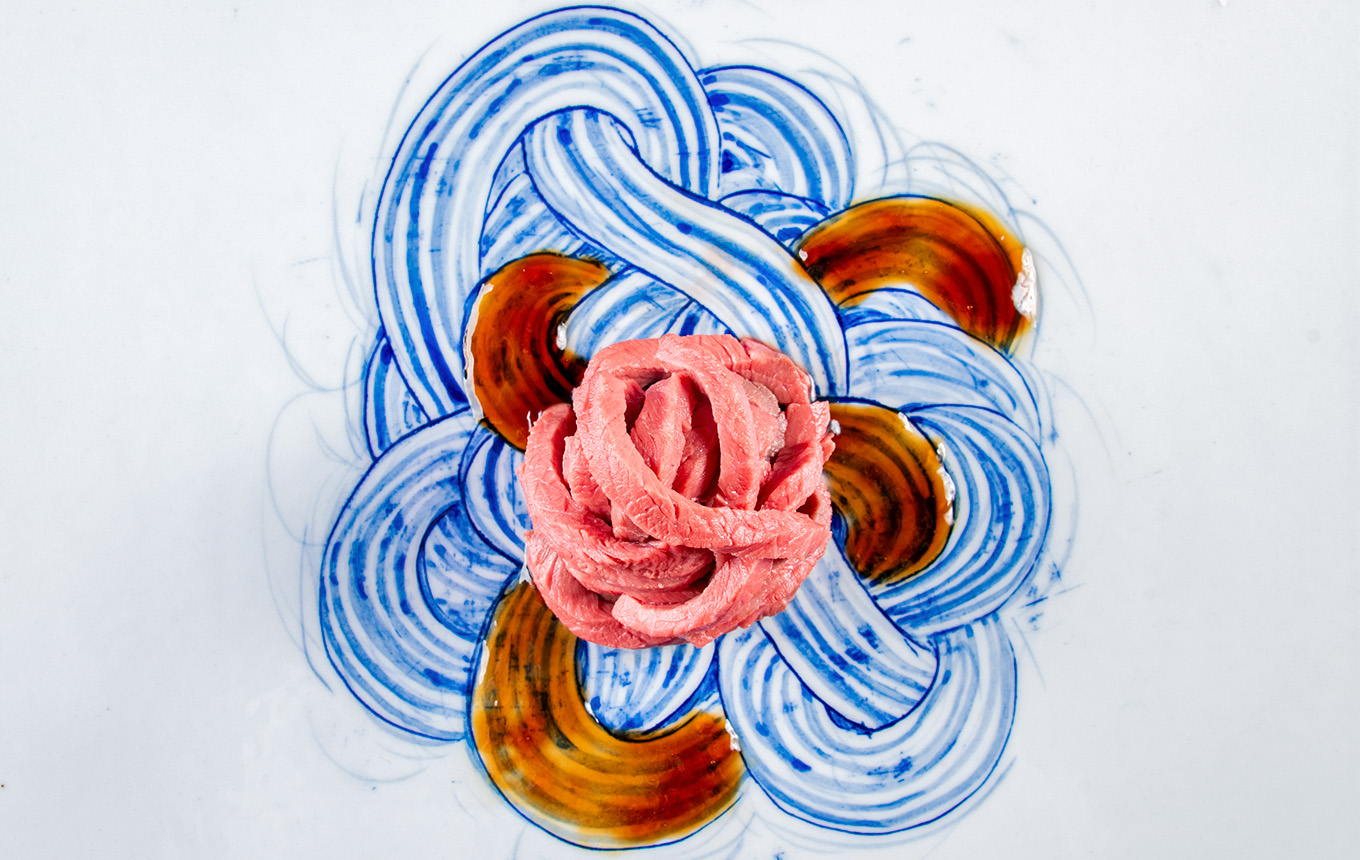
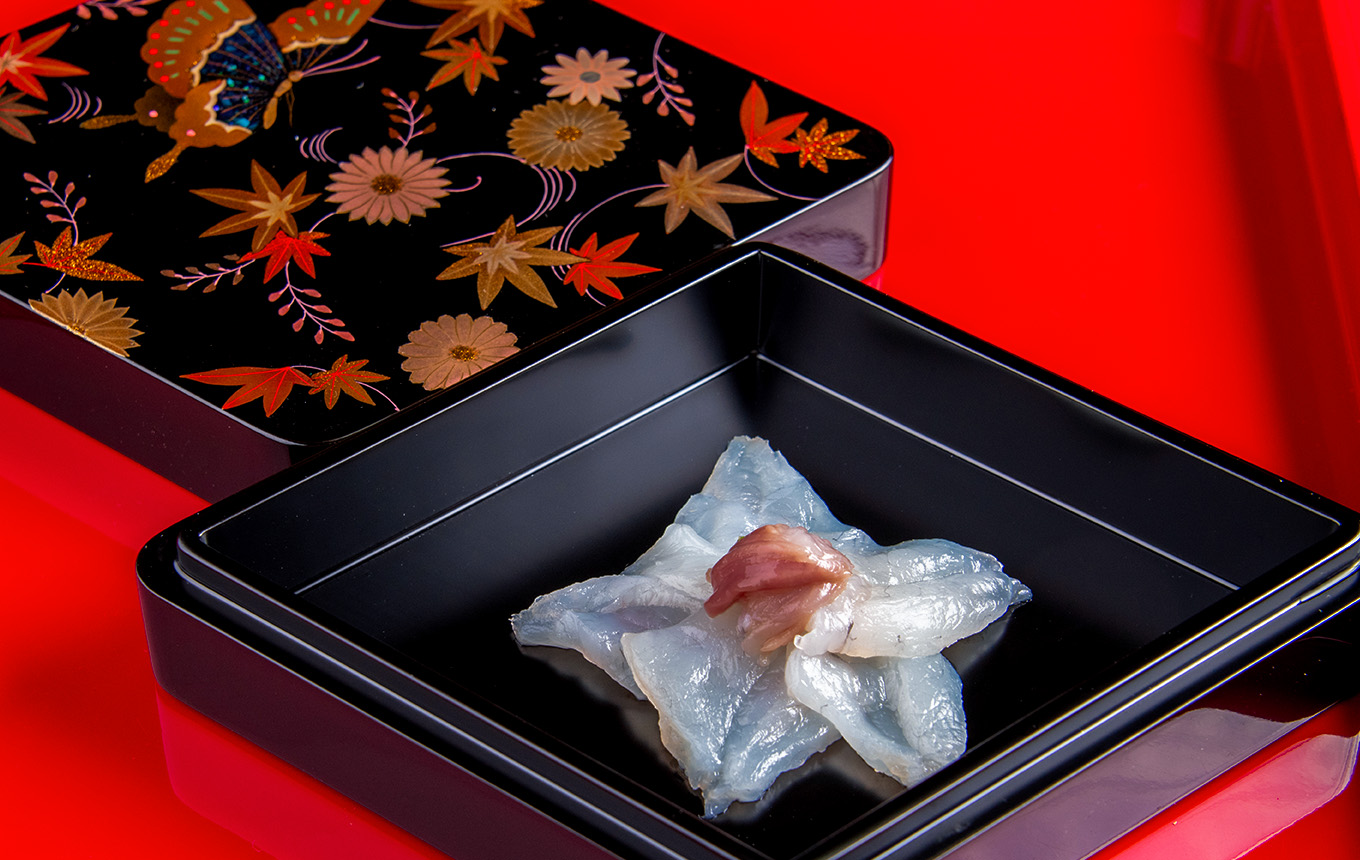
中心の赤は死を象徴します。無限円をテーマにした刺身は、外側から食べ進めると、自分に閉じていき、最終的に自己という「無」に到達します。= 食べ終わり。ただ、自分の閉じていく世界の外側に色とりどりの薬味があることで、薬味との食べ合わせによって、食べすすめに無限の組み合わせ/通りが生まれます。閉じていく内の世界と、開かれていく外の世界との交流です。またボルブドゥール遺跡のように、造里という作品として、「仏教の三界」を造りました。
器
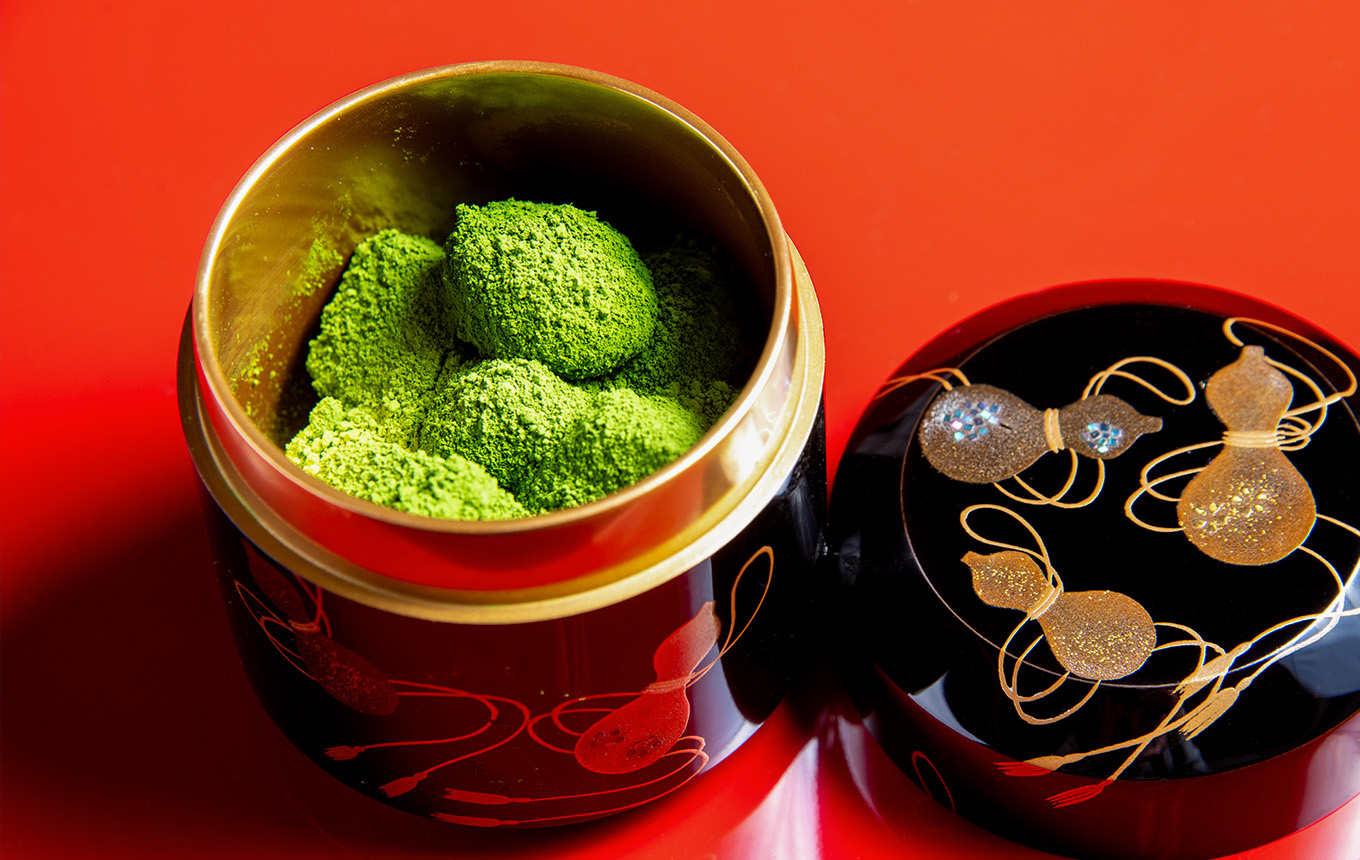
春秋蒔絵は、春夏秋冬通用するようなデザイン=通年を表しています。漆の器は冷ますこともできるため、刺身の器に好んで使用します。
料理
刺身
2枚引きフグ刺し、中心に赤色の「うぐいす」部位。
2枚引きにした実用的な理由は、口に入れる際刺身が閉じようとしてポン酢を閉じ込めることで、仮にフグの繊細な味が理解できない方が食べても、美味しいと感じてもらえるように。そして口の中いっぱいに広がること。
薬味
焼き塩、すだち、薄口醤油ポン酢、フグ皮、芽ねぎ
議論
今回の写真では薬味を写さずに外の世界を、日本独自の技法である蒔絵で表しています。時間と空間の広がりを器で表現する際、刺身を盛る漆の蒔絵で時間を、薬味を盛る器に北海道と沖縄の器を使い空間の広がりをストーリーとして伝えることもできます。貝桶を模したの中に、ふぐ皮とポン酢と薬味を合わせたものを入れて出すこともできます。
Overview
The red at the center symbolizes death.
This sashimi, themed around the infinite circle, is meant to be eaten from the outer edge inward. As one progresses, the world gradually closes in, ultimately arriving at the “nothingness” of the self—the end of eating.
However, beyond this closing inner world lies an outer world filled with vividly colored condiments. Through different combinations of sashimi and condiments, infinite variations and pathways are created.
This represents an exchange between the closing inner world and the opening outer world.
Like the ancient site of Borobudur, this tsukuri (sashimi arrangement) is conceived as a sculptural work that expresses the Three Realms of Buddhism.
Vessel
Shunju maki-e lacquerware is designed to be suitable for all seasons—spring, summer, autumn, and winter—thus symbolizing eternity and cyclical time.
Lacquerware also has the ability to retain and release cold, making it a preferred vessel for serving sashimi.
Dish
Sashimi
Twice-sliced fugu sashimi, with a red central portion from the “uguisu” cut.
The practical reason for using twice-sliced fugu sashimi is that, when placed in the mouth, the sashimi naturally closes, trapping the ponzu inside.
This ensures that even guests unfamiliar with the subtle flavor of fugu can still perceive it as delicious, while allowing the taste to expand fully throughout the mouth.
Condiments
- Grilled salt
- Sudachi citrus
- Light soy-based ponzu
- Fugu skin
- Sprouted scallions (menegi)
Discussion
In the photograph presented here, the condiments are intentionally omitted, and the outer world is instead expressed through maki-e, a uniquely Japanese decorative technique.
When expressing the expansion of time and space through vessels, the lacquerware holding the sashimi represents time, while the condiment vessels—using pottery from Hokkaido and Okinawa—can express spatial expansion as a narrative.
Another possible presentation is to serve the fugu skin, ponzu, and condiments together inside a vessel modeled after a traditional kaioke (clam container), further reinforcing the dialogue between inner and outer worlds.