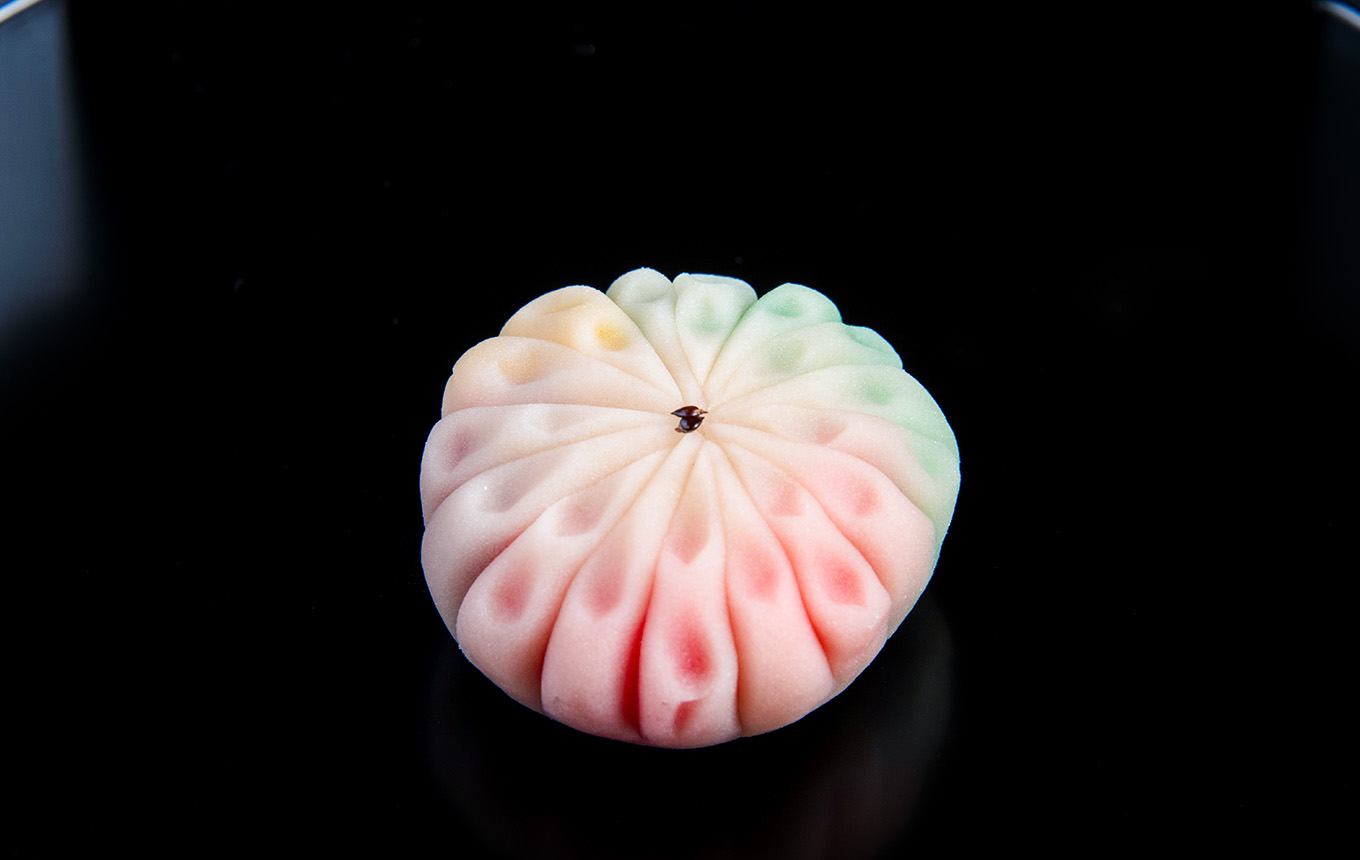
花火 Light in Darkness
懐石節高重 真塗り
Wagashi
Light in Darkness
概要
ここからがデザートコースになります。デザートの流れとして、「花火」で暗闇に光が生まれ、「檸檬」で暗闇が主体だったのが一転してレモンが主体になり、最後に太陽で日の出と共に、レモンでぼやけていた不完全な丸がしっかりした丸となって現れ、食べることで全てが消える様になっています。
器
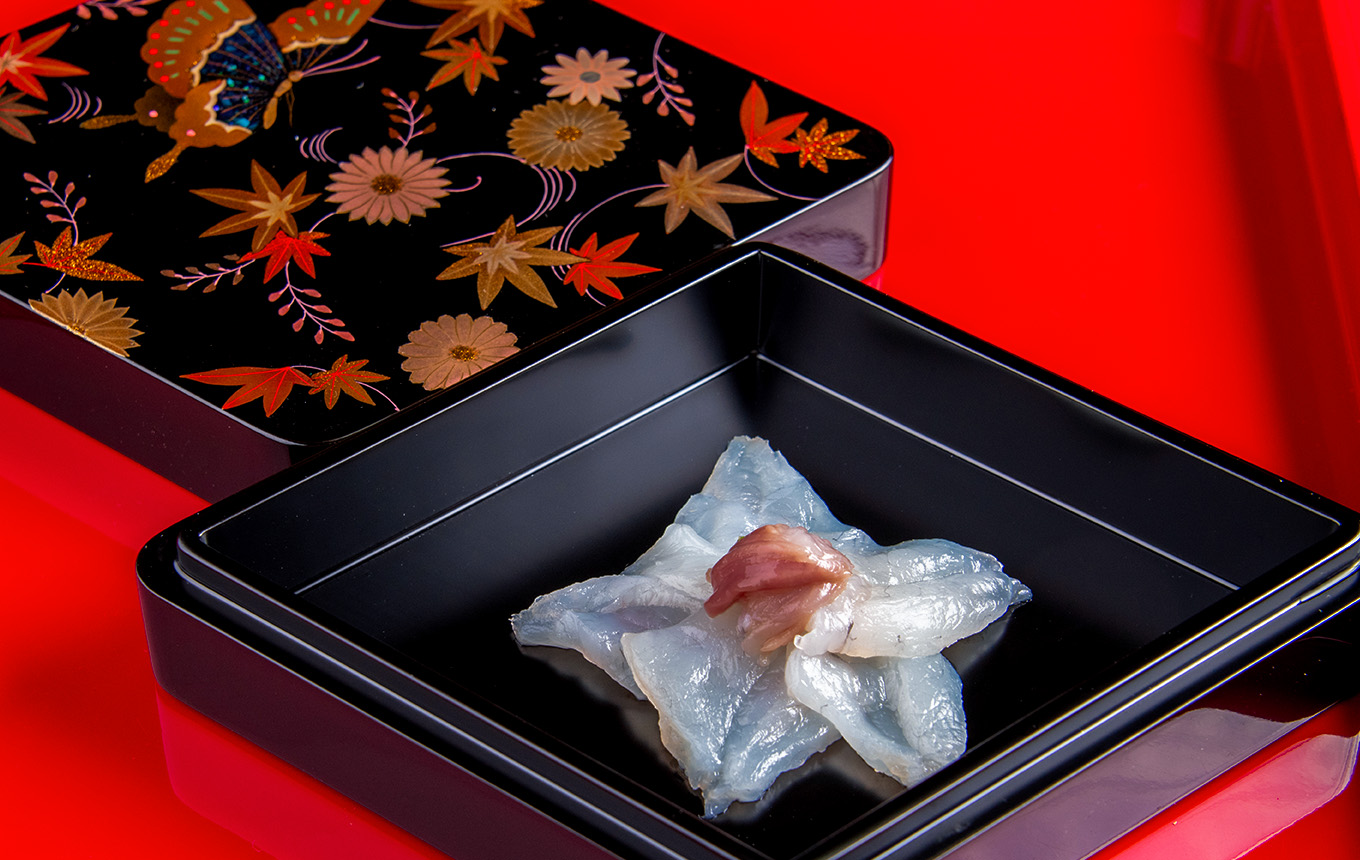
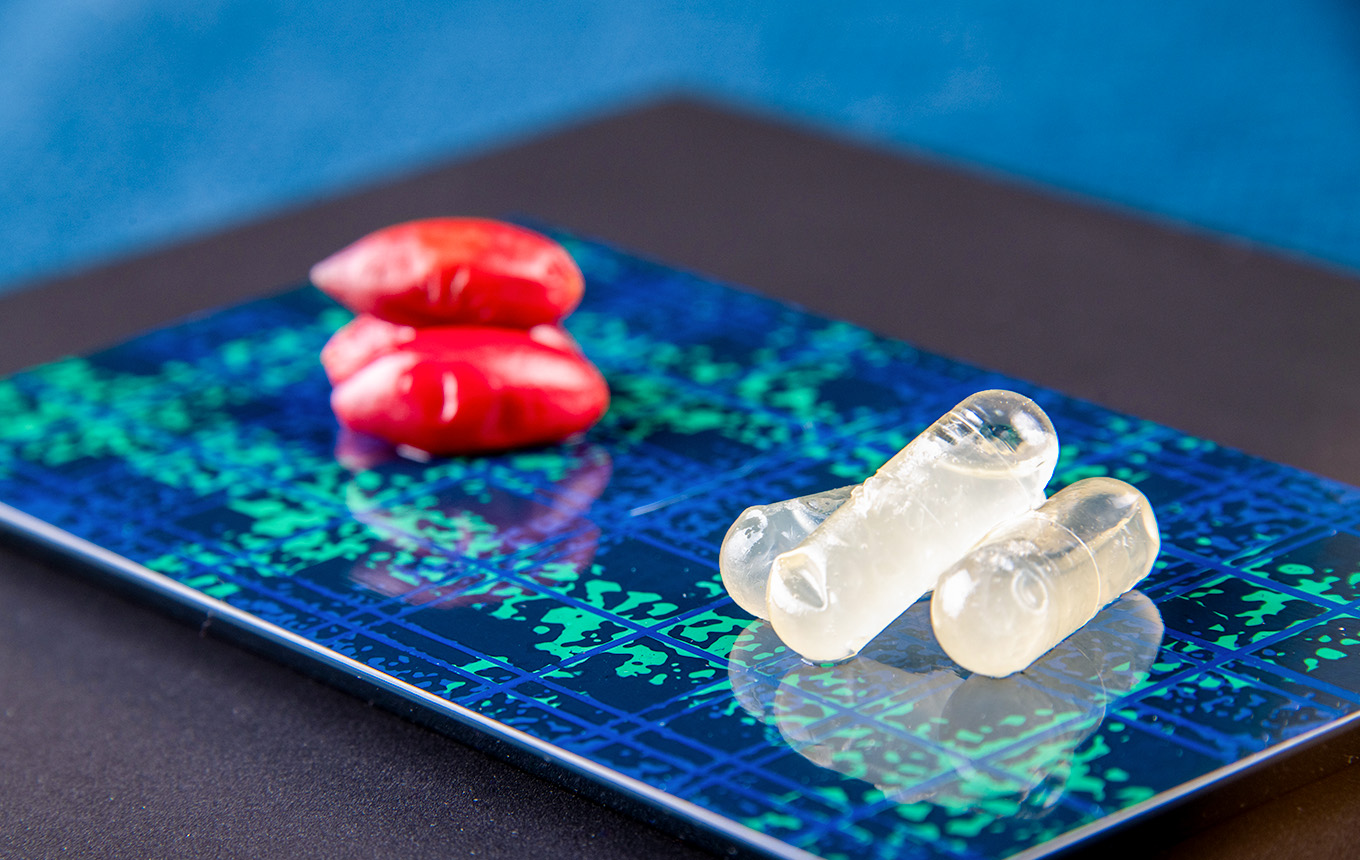
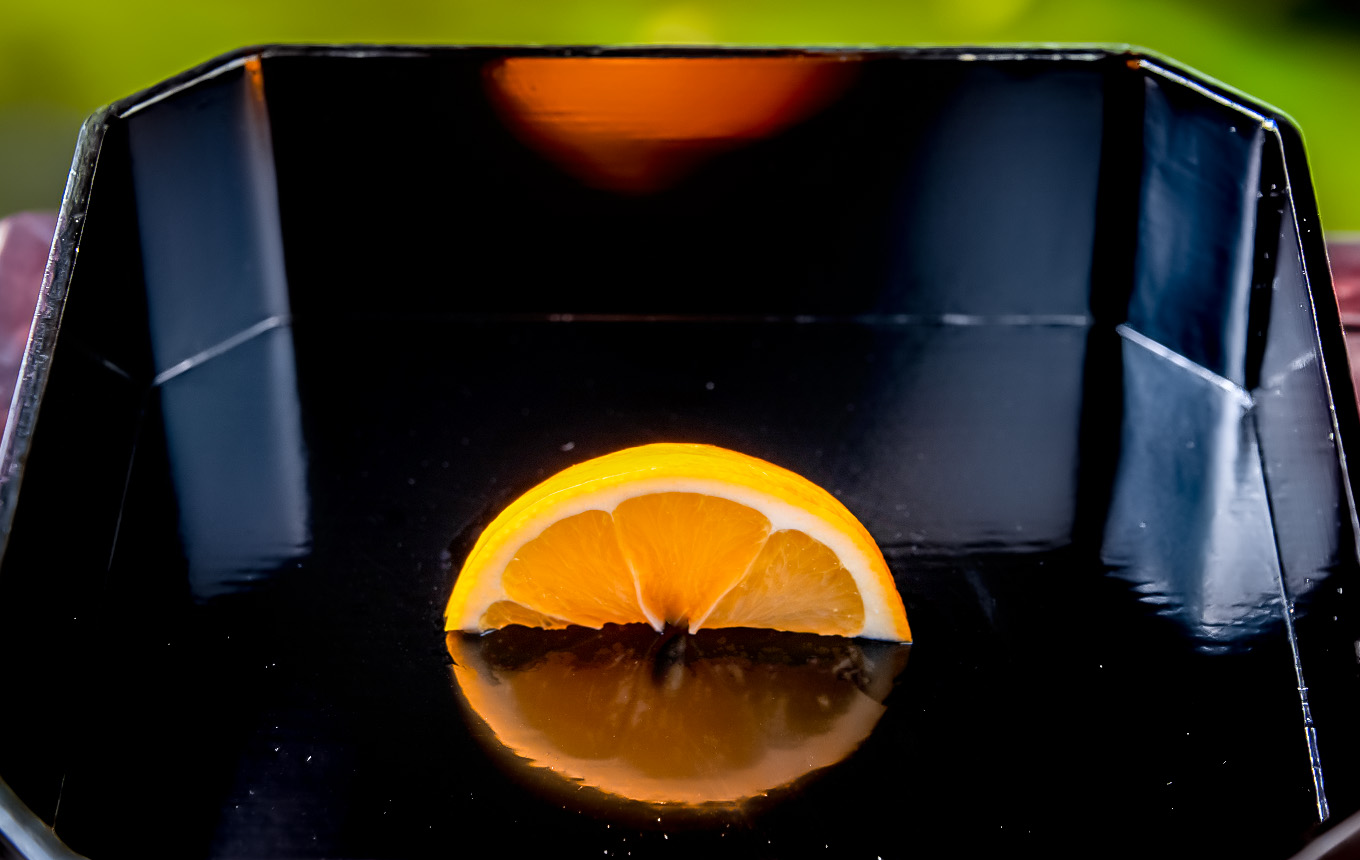
細かい変化に関してですが、13品目の和菓子と、15品目の檸檬は両方とも同じ縁高重ですが、13品目が反射する真塗りに対して、15品目には反射しない塗りの器を使用しています。
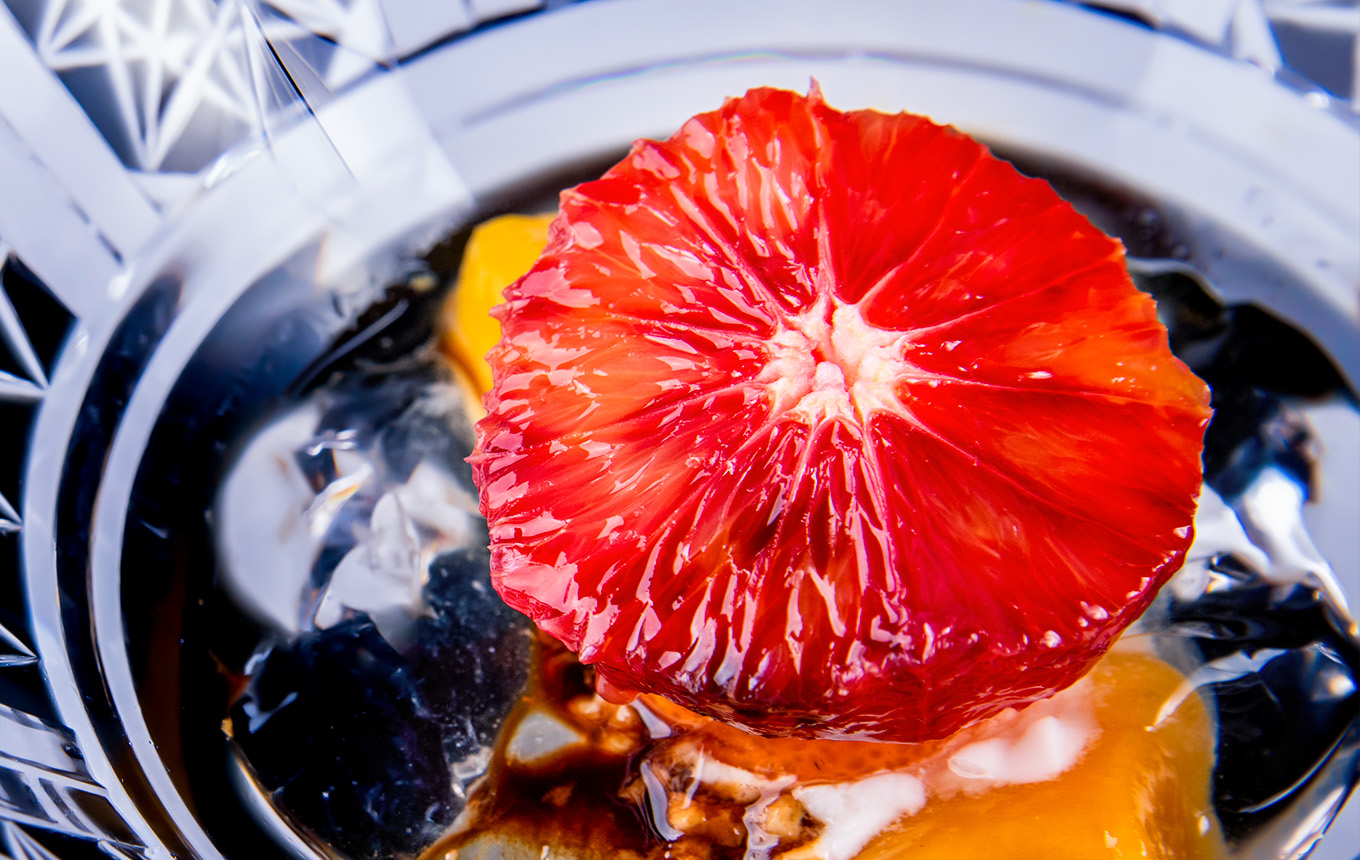
これは13品目の花火では、何も入っていない縁高重がまず提供され暗闇が主役の中花火がお客様の前で器に盛られるのに対して、15品目では既に盛って提供されるレモンが主体となり、暗闇が客に転じる、写真で言うピントがボケる感じを表現しています。
料理
外側
白小豆の自家製練り切り
中の色付け餡
4種の花のパウダーの白餡
食べた時に口の中で花畑が広がります。
中心の餡
自家製こし餡、焼酎漬け干し葡萄、+藍実(藍の種)
あんこに隠し味にごく少量の塩を入れるのがポイントです。12品目で説明した精進料理のこつと同様、あんこに塩を入れることが自己流の美味しいあんこの秘訣で、やわらかな甘味から、はっきりとした美味しさになります。干し葡萄は少量中心に入れることで、あんこが苦手な外国の方にも日本の方にも美味しいと感じでいただけるあんこになります。
議論
この和菓子のストーリーですが、最後に松崎陸さんの藍の種を炒ってこし餡に忍ばせると共に、和菓子の上に少し乗せています。まず口の中に花畑が広がり、こし餡に進むと美味しい!となり、さらに食べ進めると急に柔らかい食感の中に変化が生まれ、なんだこの食感は?という疑問が起こる。そこで、「実はアイが詰まってます。」という種明かしのストーリーになります。和菓子を日本人以外の方に広く認知して好きになっていただきたく、この様な構成にしています。
Overview
From this point, the course enters the dessert sequence.
The progression follows a clear narrative:
- Fireworks — light is born from darkness
- Lemon — the focus shifts, and lemon becomes the protagonist instead of darkness
- Sun — with sunrise, the incomplete, blurred circle formed by lemon becomes a complete, defined circle, and finally disappears through eating
What begins as darkness gradually resolves into light, form, and completion—only to vanish.
Vessel
In terms of subtle changes in presentation, the 13th dish (Wagashi) and the 15th dish (Lemon) are both served in the same fuchidaka-jū tiered box.
However:
- The 13th dish uses a highly reflective black lacquer
- The 15th dish uses a non-reflective finish
In the Fireworks dish, an empty box is first presented—darkness is the protagonist.
The fireworks are then plated in front of the guest.
In contrast, in the Lemon dish, the dessert is already plated when it arrives. Lemon becomes the subject, while darkness recedes into the background—like a photograph shifting out of focus.
Dish (Wagashi: Fireworks)
Outer Layer
House-made white adzuki bean nerikiri
Colored Filling
White bean paste infused with four kinds of flower powders
When eaten, a field of flowers blooms in the mouth.
Central Filling
House-made smooth red bean paste,
shōchū-soaked dried grapes,
and indigo seeds (ai no mi)
A crucial detail is the addition of a very small amount of salt to the red bean paste.
As with the principles explained earlier in the shōjin course, salt transforms the sweetness—soft and gentle at first, then becoming clear and defined.
The dried grapes are placed sparingly at the center, making the anko approachable and enjoyable for both Japanese and international guests, including those who are not typically fond of red bean paste.
Discussion
The story of this wagashi unfolds in stages.
First, a field of flowers spreads across the palate.
Then, the smooth red bean paste emerges—this is delicious.
As one continues eating, a subtle but unexpected change in texture appears.
What is this texture?
At that moment, the reveal comes:
“There is ai—indigo—hidden inside.”
The indigo seeds, roasted and incorporated into the red bean paste, are a final gesture linking back to the work of Riku Matsuzaki and the broader Kyō-ai narrative.
This structure is designed so that wagashi can be experienced not as something culturally distant, but as something discoverable, surprising, and enjoyable, especially for those encountering it for the first time.